Technique
Froissage FAQ: Answers About the Crumpled-Paper Technique
Written by Froissage Editorial Team · Updated
This froissage FAQ collects short answers to the questions people most often ask about the crumpled-paper technique. Each answer links to a longer guide if you want the detail. The questions and answers are listed below; for a full introduction, start with what is froissage.
Technique questions
The practical questions, about paper, ink, tearing and drying, are covered in depth in these guides:
- How to do froissage, step by step
- Froissage materials: paper weights, inks and tools
- Froissage with ink and watercolour: wash techniques
- Froissage technique mistakes: troubleshooting
- Froissage collage: combining crumpled paper with cut images
- Crumpled paper landscape painting: mountains and seas from creases
- Frottage art technique and decalcomania art technique: two related chance methods
- Drip painting technique: pouring and dripping paint, from Ernst and Sobel to Pollock
- How to draw crumpled paper: the crumpled sheet as a still-life subject
History and artists
- History of froissage: from frottage to Novák
- Ladislav Novák and froissage
- Jiří Kolář’s collage techniques
- Froissage artists: Novák, Kolář, Kijno, Hantaï and Arnal
- Czech surrealism and froissage
- Surrealist art techniques
- Fumage art technique: drawing with candle smoke
- Pareidolia in art: why we see images in creases and stains
- Victor Hugo ink drawings: a 19th-century forerunner
- Ladislas Kijno froissage and Simon Hantaï pliage: the French side
- Brassaï’s Involuntary Sculptures: crumpled and rolled scraps photographed for Minotaure in 1933
Words and comparisons
- Froissage meaning: definition and pronunciation
- Froissage vs frottage
Teaching and display
- Froissage for kids
- Froissage lesson plan
- Crumpled paper art ideas
- How to display froissage art
- Paper batik with crumpled paper and Halloween froissage monsters
- Bubble painting and blow painting with straws: two more chance techniques for children
- Crumpled paper watershed model: the same crumpled sheet used in a science lesson
Questions about related techniques
Why do I see faces in the creases? Because of pareidolia, the normal tendency to perceive meaningful images, especially faces, in random patterns. Artists have used it deliberately for centuries: Leonardo da Vinci advised painters to look at stained walls, and Alexander Cozens built a landscape method on ink blots in 1785. Froissage is one of the most direct ways to use it. Our page on pareidolia in art traces the idea.
Is froissage a kind of frottage? No. Frottage, developed by Max Ernst from 1925, records the texture of something placed under the paper by rubbing it with a pencil or crayon. Froissage creates its texture inside the paper by crumpling it. The two combine well; see our guide to the frottage art technique.
Did French artists use crumpling too? Yes, in a different way. Ladislas Kijno worked with crumpled paper from 1946 and later added spray paint, and Simon Hantaï folded and knotted canvases from 1960 in his method called pliage. Their aims were painterly rather than figurative.
Is there a froissage version of smoke drawing? Ladislav Novák also made drawings with candle smoke from the early 1970s, a technique called fumage. It involves an open flame and is for adults only; see fumage for safety advice.
Questions about the crumpled sheet itself
Why does paper crease instead of curving smoothly? Paper bends very easily but hardly stretches. When you squeeze a sheet into a ball, the only way it can fit is by bending, and the bending gathers into narrow ridges and sharp points while the paper between them stays almost flat. The result is a network of ridges and facets, which is exactly what a froissage wash reveals. Our page on the science of crumpled paper summarises the research.
How many times should I crumple the sheet? It depends on the image you want. Experiments on thin sheets at Harvard found that the total length of creases grows roughly logarithmically: the first few crumples create most of the network, and later ones mostly break big facets into smaller ones. Crumple once, firmly, for bold shapes such as mountains or figures; crumple several times for a fine, fabric-like texture.
Will the creases ever disappear? No. A crease is a line where the paper has been permanently deformed. You can make a sheet lie flat for framing or scanning, as explained in how to flatten crumpled paper, but the lines stay visible in raking light. In froissage that is the point.
Did anyone treat crumpled scraps as art before froissage? Yes. In 1933 the Surrealist magazine Minotaure published close-up photographs by Brassaï, with captions by Salvador Dalí, of objects shaped without intention, among them a tightly rolled bus ticket. They were called Sculptures involontaires. See Brassaï’s Involuntary Sculptures.
Is there a way to practise seeing creases before painting? Draw a crumpled sheet from life with one lamp from the side. It teaches you to read planes of light and shadow quickly; see how to draw crumpled paper. For a classroom twist that uses the same sheet in science, try the crumpled paper watershed model.
The short version
If you read nothing else: froissage is the technique of crumpling a sheet of paper, flattening it, washing it with diluted ink or watercolour so the creases show, and then drawing out an image suggested by the crease pattern. The Czech poet and artist Ladislav Novák developed it as a named method around 1964, his friend Jiří Kolář also used it, and it follows the Surrealist tradition of chance techniques that began with Max Ernst’s frottage in 1925. It needs only cheap materials, works with children and adults, and every result is unique.
A note on accuracy
Information on froissage online is often repeated without sources, and some claims, such as exact dates for when the technique “spread” or which artists used it, are hard to verify. We cite museum, encyclopedia and publisher sources on every page and leave out what we cannot check. If you know of a reliable source we should add, please let us know through the contact page.
Frequently asked questions
What is froissage?
Froissage is an art technique in which paper is crumpled, flattened and coloured so that its creases become visible, and the artist then develops an image from the crease pattern.
Who invented froissage?
The Czech poet and artist Ladislav Novák (1925-1999) developed froissage as a named method around 1964. His friend Jiří Kolář used it too, and French painters such as Ladislas Kijno worked with crumpled paper independently.
Is froissage related to surrealism?
Yes. It follows the Surrealist idea of automatism, using chance to start an image. Novák belonged to a student surrealist group in his youth. Froissage itself was developed in the 1960s, after the classic Surrealist techniques.
How does froissage differ from frottage?
Frottage rubs a texture from a surface underneath the paper. Froissage creates the texture in the paper itself by crumpling it.
What materials are best for froissage?
Medium drawing paper of about 80-120 gsm, ink or watercolour diluted with water, a wide soft brush and a fine pen. Thin paper gives sharper creases; heavy paper gives softer ones.
Can beginners and children do froissage?
Yes. It needs no drawing skill to start, and children from about age five can do it with help. Use washable, child-safe paints.
Where can I see froissage artworks?
Works by Novák and Kolář are held by Czech public collections such as the National Gallery Prague. Their online collection databases, and the Slovak National Gallery's Web umenia site, show many of them.
How do I pronounce froissage?
Roughly frwah-SAHZH, with the final sound like the 's' in 'measure'.
What is alchemage?
Alchemage was Ladislav Novák's technique of chemically treating printed images. He often combined it with froissage. It involves chemicals and is not a classroom technique.
What paper weight should I use?
Start with drawing or cartridge paper of about 100-120 gsm. Copy paper (75-90 gsm) is fine for practice, and light watercolour paper (about 190 gsm) suits very wet techniques.
Can froissage be done digitally?
You can photograph or scan a crumpled sheet and draw over it in an image editor, and many illustrators keep libraries of crumpled-paper textures. The physical method still teaches more about how creases hold colour.
How do I frame a froissage?
Flatten it under weight, mount it on acid-free board with hinges or photo corners, and use a deep frame so the glass does not touch the textured surface.
Why does crumpled paper make such good textures?
Paper bends easily but hardly stretches, so when it is squeezed it concentrates the bending into sharp ridges between flat facets. Researchers at Harvard found that the total length of these creases grows quickly in the first crumples and then ever more slowly.
Can I draw a crumpled sheet instead of painting on it?
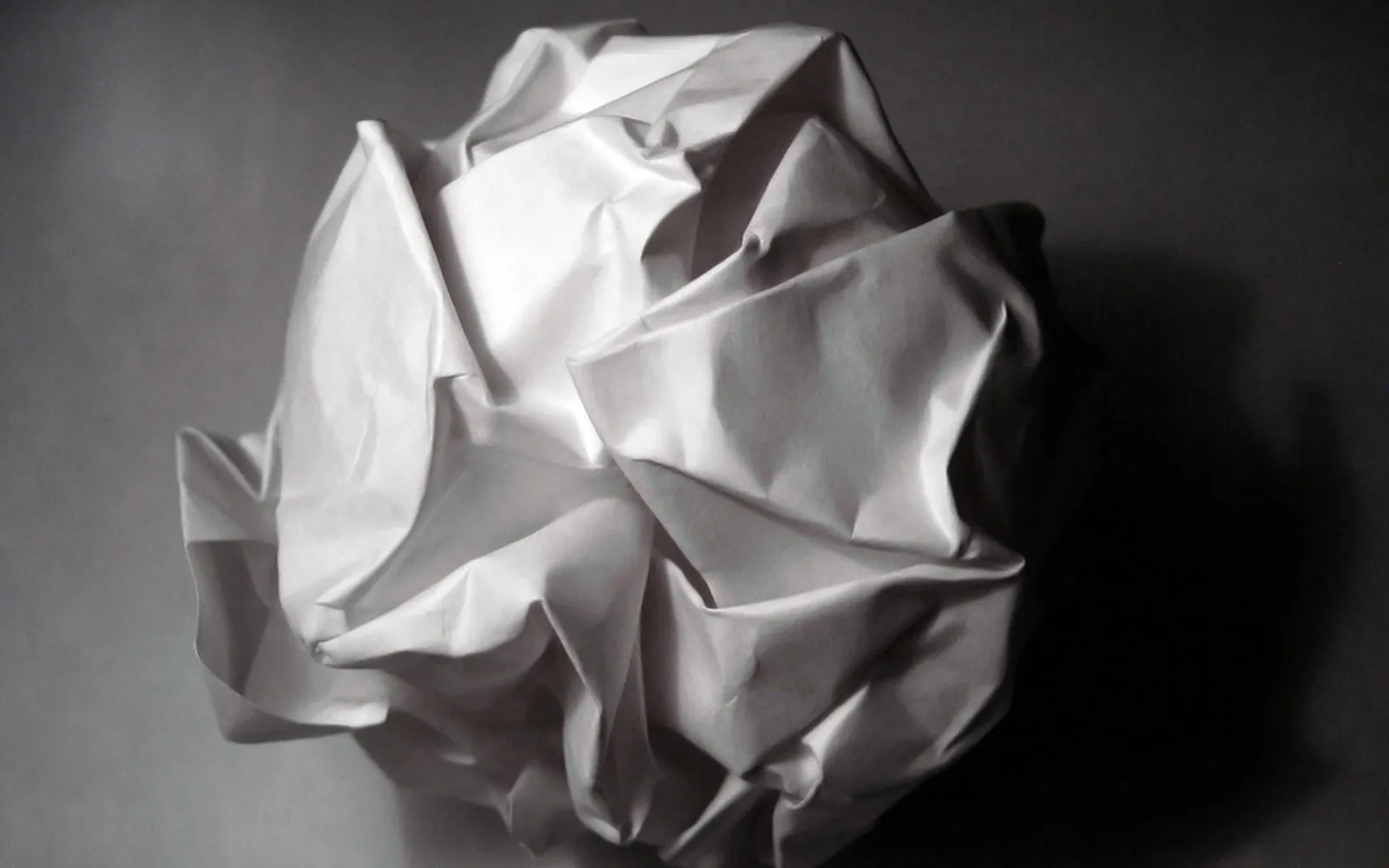
Yes. Drawing a crumpled sheet in pencil is a classic observation exercise in light and shade. It is a different technique from froissage, but it trains the same eye for creases and planes.
Sources
Editorial team
The Froissage.com editorial team researches the history of froissage from museum, encyclopedia and publisher sources and writes practical guides to the technique.