History
History of Froissage: From Surrealist Chance to Novák
Written by Froissage Editorial Team · Updated
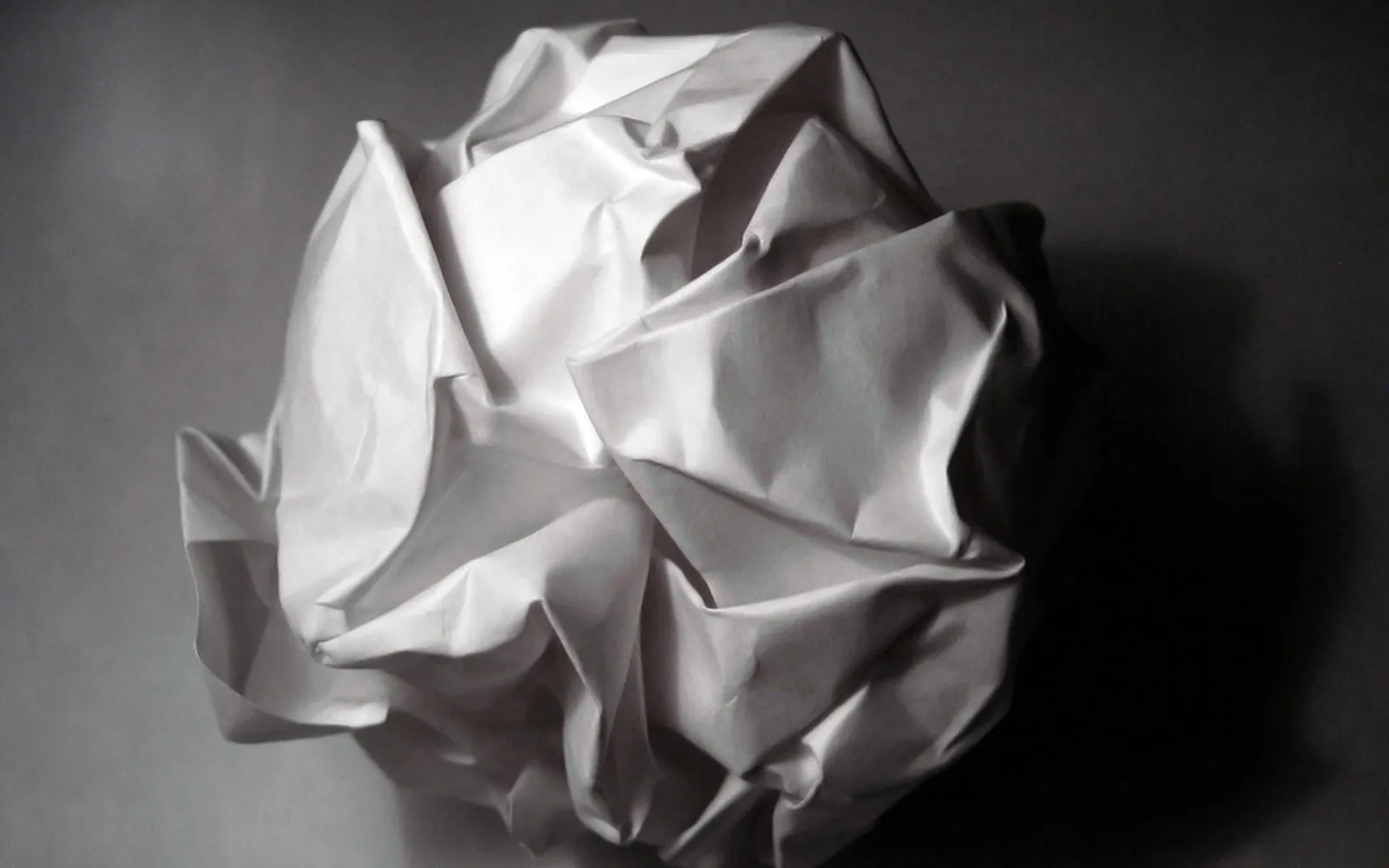
The history of froissage is the story of a very old idea, that accidents in a material can suggest images, being turned into a deliberate method. It runs from Leonardo’s often-quoted advice to look for landscapes in stained walls, through the Surrealist techniques of the 1920s and 1930s, to a schoolteacher-poet in the Czech town of Třebíč who, in the 1960s, made crumpled paper the centre of his work.
This page sets out the main steps. For a definition of the technique, see what is froissage.
Chance as a method: the Surrealist background
Surrealism, launched in Paris by André Breton’s 1924 manifesto, valued automatism: ways of making art that bypass conscious control and let the unconscious speak. Writers used automatic writing. Painters looked for technical equivalents.
The decisive step came from Max Ernst. According to Tate, in 1925 Ernst was struck by the grain of an old, much-scrubbed wooden floor. He laid sheets of paper on it and rubbed them with a soft pencil, then developed the patterns into strange forests and creatures. He published a series of these frottage drawings in 1926 as Histoire Naturelle. Ernst soon adapted the idea to oil paint as grattage, scraping paint from a canvas laid over textured objects; Tate notes that the trees in Forest and Dove (1927) were made by scraping over a fish’s backbone.
Other techniques followed:
- Decalcomania. Paint is pressed between two surfaces and pulled apart. MoMA notes that Marcel Jean credited Óscar Domínguez with introducing it to the Surrealist circle in 1936; Ernst used it extensively afterwards.
- Fumage. Wolfgang Paalen used candle smoke to leave soft traces on paper and canvas from the mid-1930s.
Each of these turns a physical accident into the raw material for an image the artist then interprets. Froissage applies the same procedure to the creases of crumpled paper. Our surrealist art techniques page compares all of them.
Surrealism in Prague
Surrealism took root early in Czechoslovakia. The Surrealist Group in Czechoslovakia was founded in Prague in March 1934, one of the first such groups outside France, with the poet Vítězslav Nezval and the painters Jindřich Štyrský and Toyen among its members, and the theorist Karel Teige joining soon after. Its first exhibition opened at the Mánes building in Prague in January 1935. Štyrský himself made decalcomanias in the 1930s.
This matters for froissage because the next generation of Czech experimental artists grew up with that tradition. Ladislav Novák, as a gymnasium student in Třebíč, joined a student surrealist group and made contact with Nezval, according to his publisher Twisted Spoon Press. Read more in Czech surrealism and froissage.
Ladislav Novák and the birth of froissage
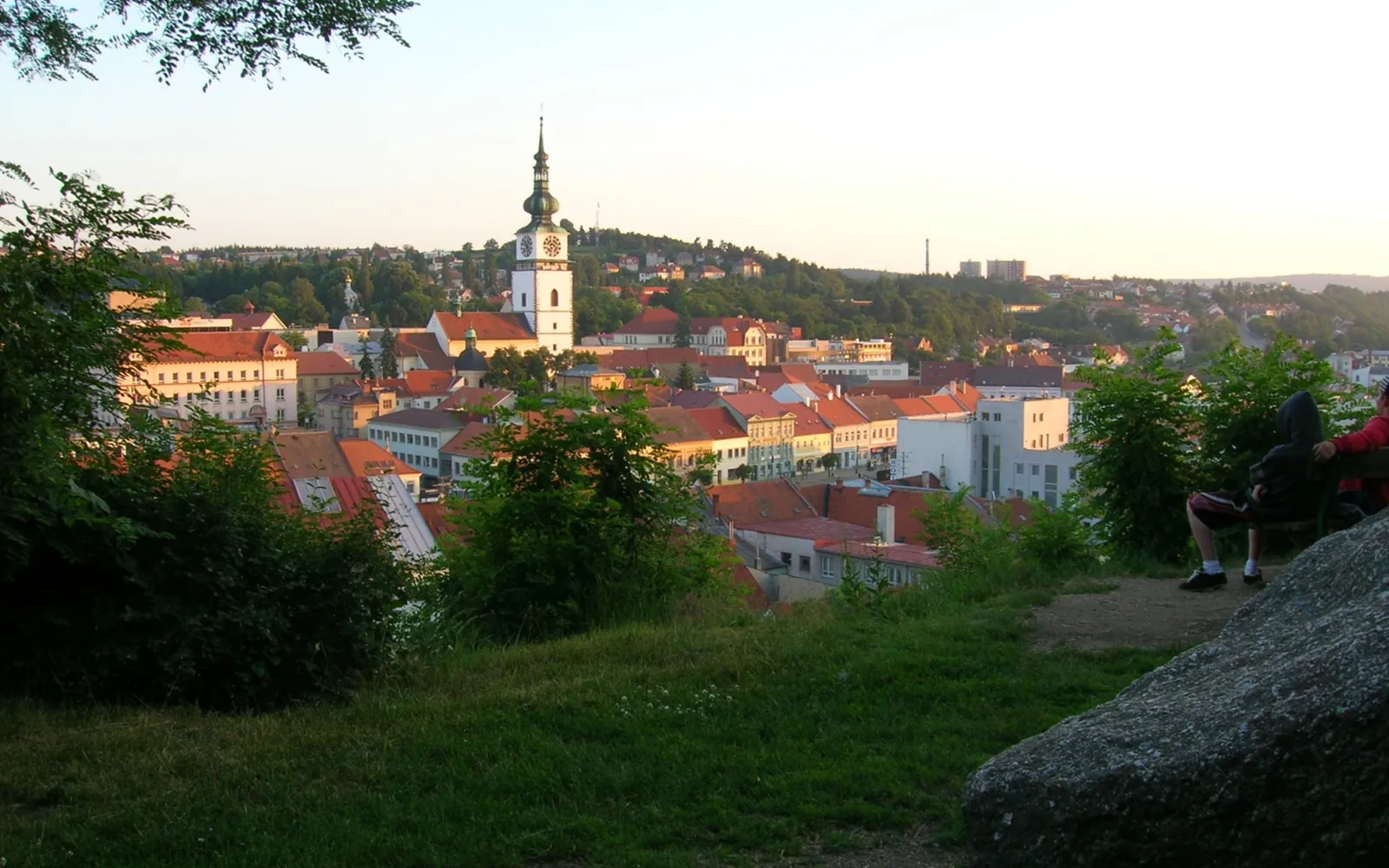
Ladislav Novák (1925-1999) studied Czech and history at Charles University in Prague and then taught at the gymnasium in Třebíč from 1954 until his death. He began as a poet and became a pioneer of Czech concrete and sound poetry, forming the first Czech Group of Experimental Poetry with Jiří Kolář and Josef Hiršal.
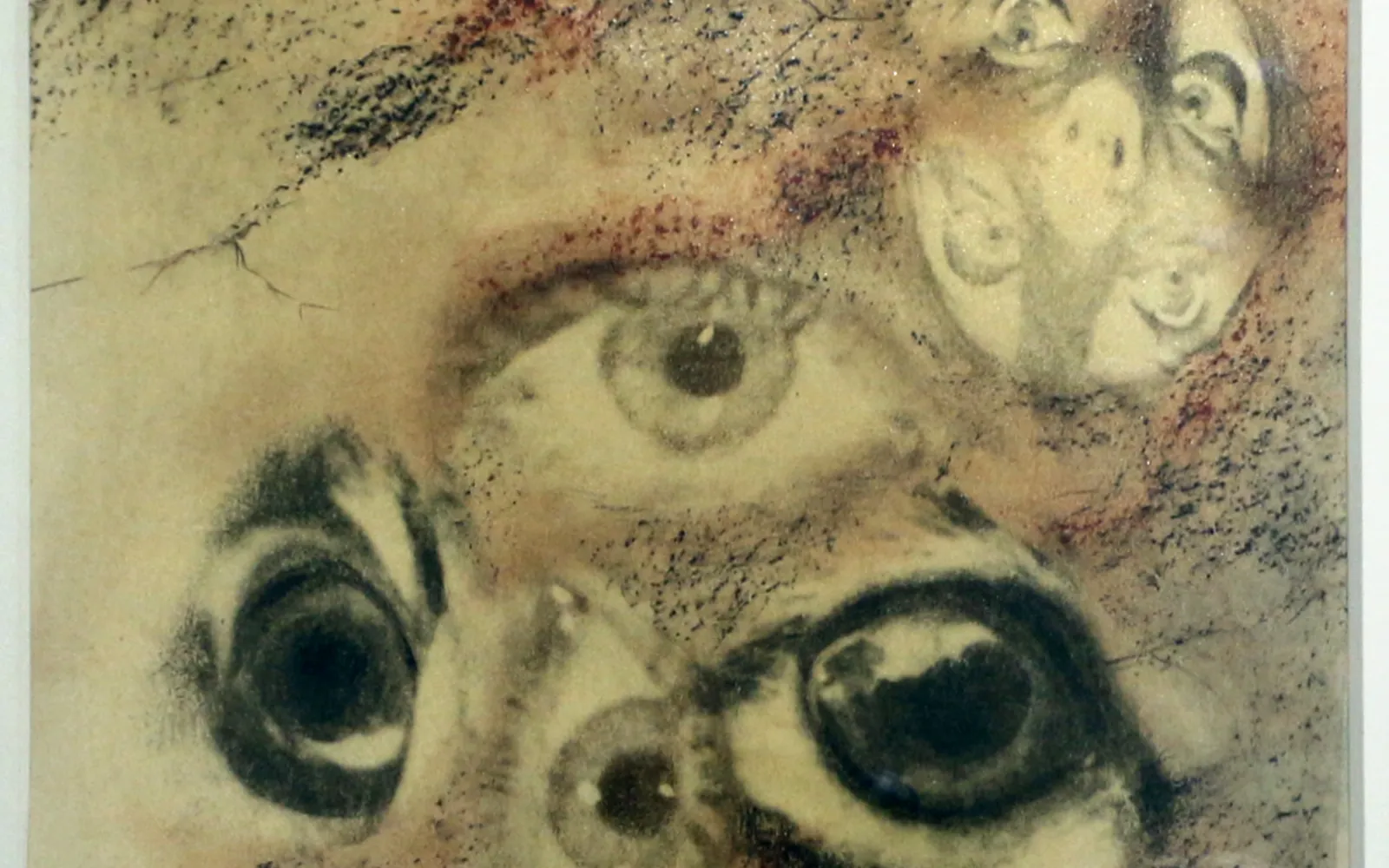
In the 1960s his work turned increasingly visual. Before froissage he experimented with alchemage, chemically treating pages from illustrated magazines. Around 1964, according to Multiples, he began his froissages: a crumpled sheet’s network of lines became the starting point for a drawing. He often combined the two, and the pairing of froissage with alchemage became his most popular kind of work. He also made topological drawings and smoke drawings he called fumages.
His publisher, Twisted Spoon Press, describes both methods as giving free rein to chance, and they brought him the most recognition, with exhibitions in Prague and abroad, including Paris, Milan and Amsterdam. Full biography: Ladislav Novák and froissage.
Jiří Kolář and the Czech collage tradition
Jiří Kolář (1914-2002), Novák’s friend and fellow experimental poet, turned from poetry to visual work in the late 1950s and invented or helped develop a whole vocabulary of collage methods. Wikipedia lists confrontage, froissage, rollage and chiasmage among them, and Czech sources also name a crumpling method, muchláž. Kolář’s international reputation, including a 1975 exhibition at the Solomon R. Guggenheim Museum in New York, helped make Czech collage methods known abroad. See Jiří Kolář’s collage techniques.
Art under pressure
The careers of both men were shaped by politics. Kolář was barred from publishing after 1948 and arrested in the early 1950s (sources give 1952 or 1953) after police found his manuscript Prométheova játra (Prometheus’ Liver); he spent several months in prison. He signed Charter 77 and, while on a scholarship in West Berlin, was effectively forced into exile, living in Paris from 1980. Novák was prohibited from exhibiting and publishing in Czechoslovakia from 1979, though he continued to show abroad. Working with waste paper and old prints was cheap, private and hard to police, which suits the circumstances, but it would be an exaggeration to say froissage was invented as a protest.
Crumpling in French painting
Crumpling also appears in France, largely independently of Novák:
- Ladislas Kijno (1921-2012) experimented with crumpled paper on canvas from the late 1940s, according to the Encyclopaedia Universalis, and later combined it with spray paint.
- Simon Hantaï (1922-2008) began his pliage comme méthode (folding as method) in 1960: folding, crumpling or knotting canvas, painting it blind and then opening it.
- André-Pierre Arnal (1939-2024), a member of the Supports/Surfaces group, made a large Froissage in 1968 by crumpling an unstretched canvas and spraying it with paint. The Fondation Gandur pour l’Art, which owns it, notes the influence of Hantaï.
These are covered in our guide to froissage artists.
Froissage in the wider history of chance
Froissage did not appear from nowhere. It belongs to a long line of methods in which artists use accidents as starting points. Leonardo da Vinci recommended looking at stained walls for compositions; Alexander Cozens taught landscape from ink blots; Victor Hugo pressed and stained paper for his ink drawings. In the 1910s Dada artists such as Hans Arp and Marcel Duchamp made chance a deliberate method, and in the 1920s and 1930s the Surrealists added frottage, grattage, decalcomania and fumage. Our page on chance in art tells that story in more detail.
Two of the Surrealist inventors now have their own profiles: Óscar Domínguez, who made decalcomania a Surrealist method in 1936, and Wolfgang Paalen, who developed fumage in 1936-37. Froissage, as practised by Ladislav Novák in the 1960s, applied the same logic to a single crumpled sheet. In France, crumpling also entered painting through Simon Hantaï and, after him, painters of Supports/Surfaces such as André-Pierre Arnal, whose 1968 Froissage is a crumpled, spray-painted canvas.
Froissage today
Since the 1990s froissage has had two lives. In museums, Novák’s and Kolář’s work is held by Czech public collections, and a gallery devoted to Novák has operated in Třebíč since 2002, according to the Slovak National Gallery. In classrooms, froissage has become a standard lesson in chance and observation, because it needs almost no materials. If you want to try it, start with our step-by-step froissage guide or the froissage lesson plan.
Frequently asked questions
When was froissage invented?
Ladislav Novák developed froissage around 1964, according to the gallery archive Multiples. Crumpling paper or canvas as part of making a picture was explored by other artists before and after that date, so 1964 marks Novák's method rather than the first crumpled artwork.
Was froissage part of the Surrealist movement?
Froissage draws on Surrealist ideas of chance and automatism, and Novák had belonged to a student surrealist group as a young man. But it was developed decades after the Paris Surrealists' main techniques, in 1960s Czechoslovakia.
Why was froissage considered subversive in Czechoslovakia?
Experimental art had no official place under the communist regime. Kolář was arrested in the early 1950s over a manuscript and later forced into exile, and Novák was barred from exhibiting and publishing at home from 1979. The technique itself was not banned, but the artists who used it worked largely outside official culture.
Is froissage the same as Hantaï's pliage?
No. Simon Hantaï's pliage, begun in 1960, involves folding, crumpling or knotting a canvas, painting the exposed parts and then opening it. It shares the use of chance and creases with froissage but is a separate painting method.
Sources
- Frottage - Tate art terms
- Grattage - Tate art terms
- Decalcomania - MoMA collection terms
- Stories: Ladislav Novák - Multiples.nl
- Ladislav Novák - Twisted Spoon Press
- Jiří Kolář - Wikipedia
- Simon Hantaï - Encyclopaedia Universalis
- Jiří Kolář and Ladislav Novák - Slovak National Gallery (Web umenia)
- André-Pierre Arnal, Froissage (1968) - Fondation Gandur pour l'Art
Editorial team
The Froissage.com editorial team researches the history of froissage from museum, encyclopedia and publisher sources and writes practical guides to the technique.