History
Pareidolia in Art: Seeing Pictures in Stains and Creases
Written by Froissage Editorial Team · Updated
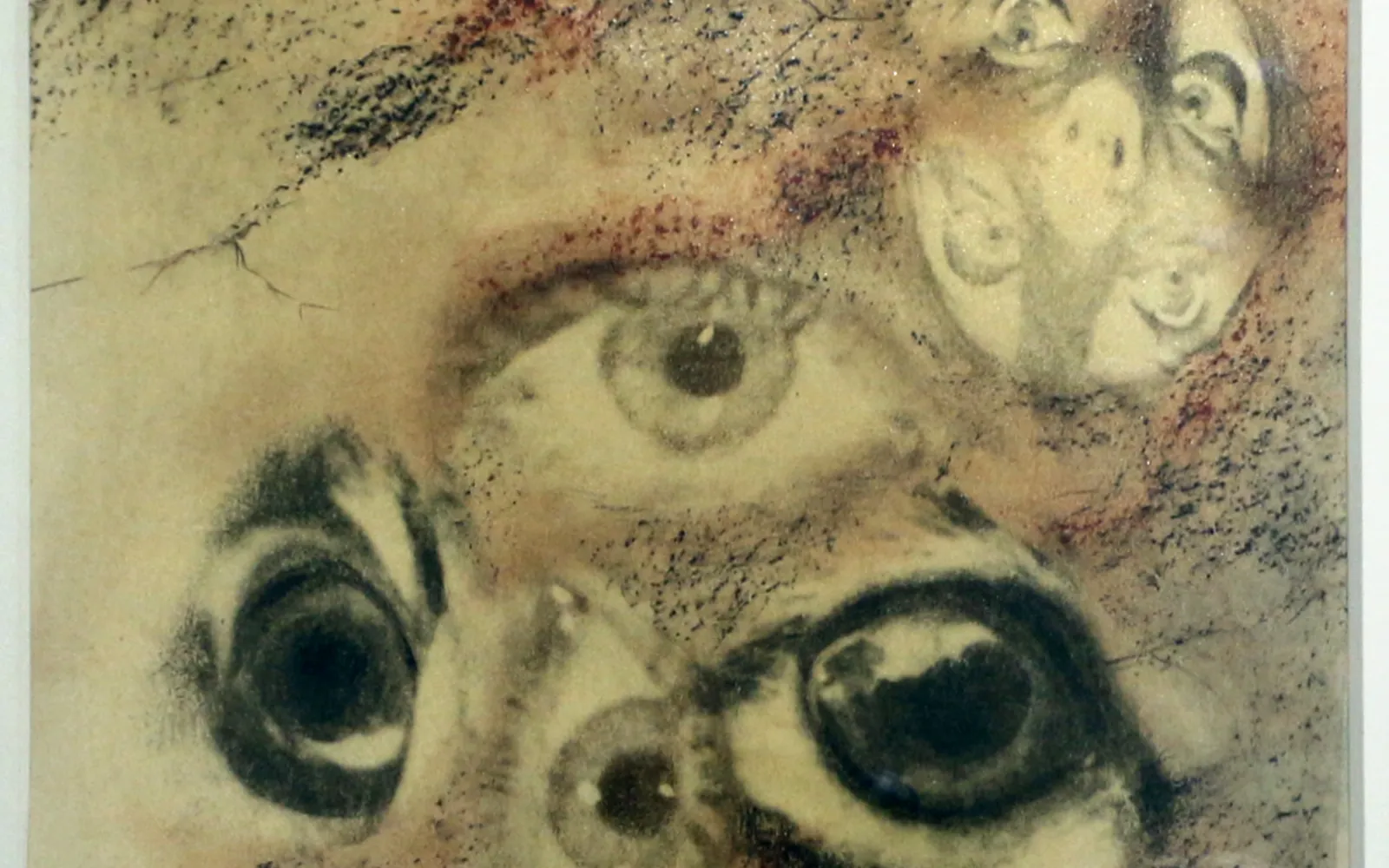
Pareidolia in art is the old trick of letting accidents suggest pictures. You look at a stained wall, a cloud, a smear of ink or the creases of a crumpled sheet, and a face looks back. Psychologists describe this as a normal habit of perception. Artists, from Leonardo da Vinci to the Surrealists, have used it on purpose. Froissage, the technique this site is about, is one of the most direct ways to put pareidolia to work. This article traces the idea through history and ends with exercises to train your own eye.
What pareidolia is
Pareidolia is the tendency to perceive a meaningful image or pattern in a vague or random stimulus, usually visual: faces in clouds, animals in rock formations, a figure in the grain of wood. It is considered a specific type of apophenia, the broader tendency to find patterns in randomness.
The word combines the Greek para (beside, alongside) and eidolon (image, form). According to Wikipedia, the German psychiatrist Karl Ludwig Kahlbaum introduced the term Pareidolie in an 1866 paper on sensory delusions, and a review the following year rendered it in English as “pareidolia”.
Nothing about pareidolia is unusual or unhealthy. Most people see faces in electrical sockets and car fronts. Artists simply slow the process down and act on it.
Leonardo’s stained walls
The most famous early advice comes from Leonardo da Vinci. In his notes on painting, collected after his death and translated in J. P. Richter’s edition of the Notebooks, he describes a device that is “extremely useful in arousing the mind to various inventions”. If you look at walls spotted with stains or built of mixed stones, he writes, you may see landscapes with mountains, rivers and trees, battles, strange faces and figures in movement, which the painter can then render in proper form.
Leonardo admits the device may seem trivial, even ludicrous, but insists on its value, and compares the confused shapes on the wall to the jangle of bells, in which you can hear any word you choose. The painter does not copy the stain; the stain sets the imagination going.
Alexander Cozens and the blot
In the 18th century the landscape painter Alexander Cozens (1717-1786) built a teaching system on the same idea. In 1785 he published A New Method of Assisting the Invention in Drawing Original Compositions of Landscape. He made quick, loose blots of ink on paper and used them as the basis for landscape compositions, defining a blot as “a production of chance with a small degree of design”. Cozens himself credited Leonardo’s passage as an influence. Examples of his blot drawings are held by the Metropolitan Museum of Art and Tate.
Cozens’ method is especially close to froissage. In both cases the artist first makes a semi-random mark on paper, with some control but without a plan, and then reads it as a landscape.
Kerner’s inkblots and Victor Hugo’s stains
In the 19th century the German poet and physician Justinus Kerner (1786-1862) turned accidental inkblots into small images to accompany his poems. He began a collection called Klecksographien in 1857; later editions were published, including one in 1890. The art of making pictures from inkblots is still known as klecksography.
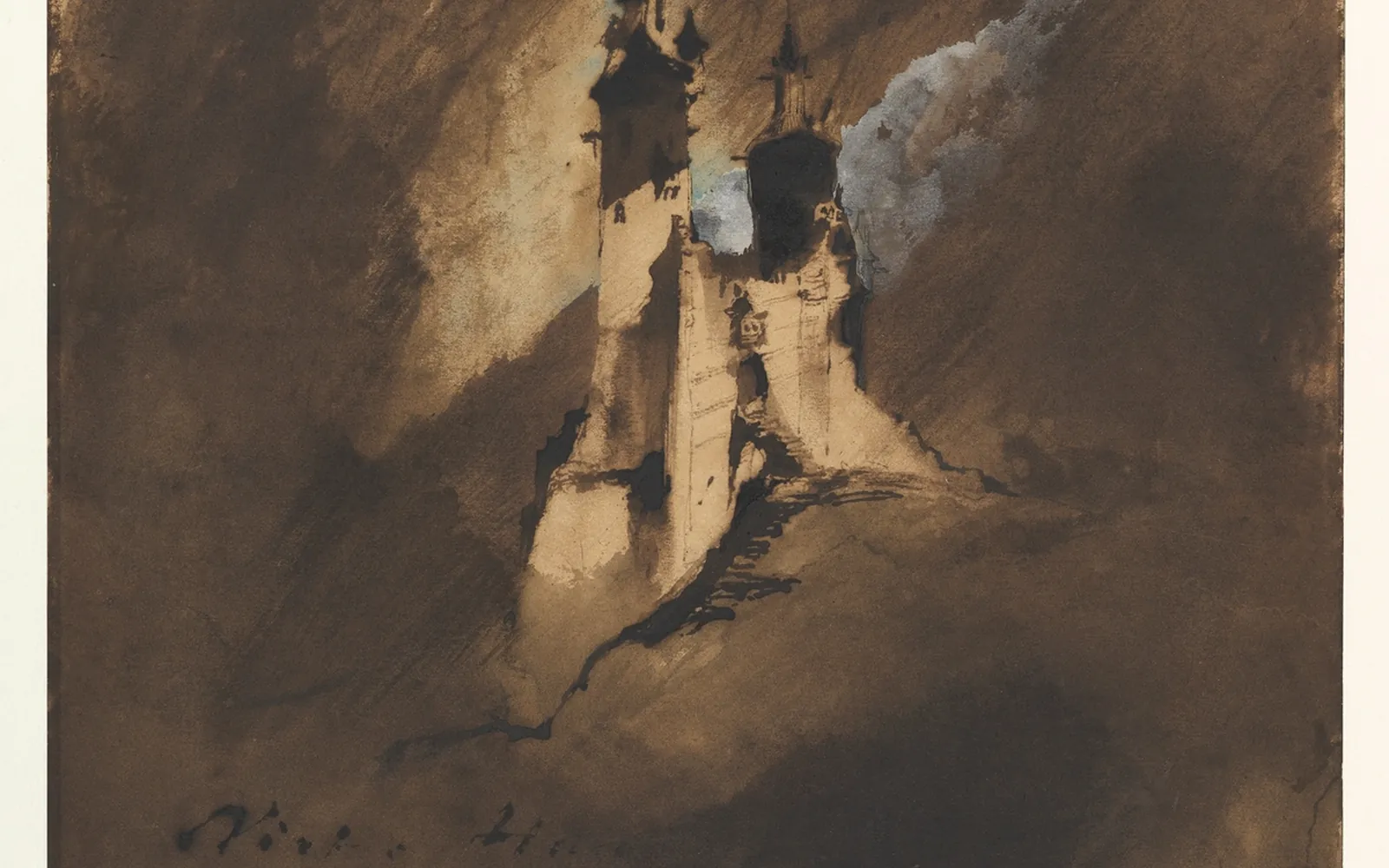
At around the same time Victor Hugo was making ink drawings that started from blots, pools and stains. The Maison de Victor Hugo in Paris notes that he used inkblots as prompts for his imagination, something later admired by the Surrealists. Our page on Victor Hugo’s ink drawings looks at his methods in detail.
Inkblots also entered psychology. The Swiss psychiatrist Hermann Rorschach published his inkblot test in 1921, using ten cards. Wikipedia notes that as a boy he was so fond of klecksography that friends nicknamed him “Klecks”.
The Surrealists: chance as a system
In the 20th century the Surrealists made pareidolia a programme. Max Ernst’s frottage, begun in 1925, started from rubbings of wood grain in which he saw forests and birds. Decalcomania, introduced by Óscar Domínguez in 1936, produced spongy textures that became landscapes and creatures. Wolfgang Paalen’s fumage did the same with candle smoke. Salvador Dalí built paintings around double images, where one form can be read as two different things. Our overview of Surrealist art techniques compares these methods.
Froissage as a pareidolia machine
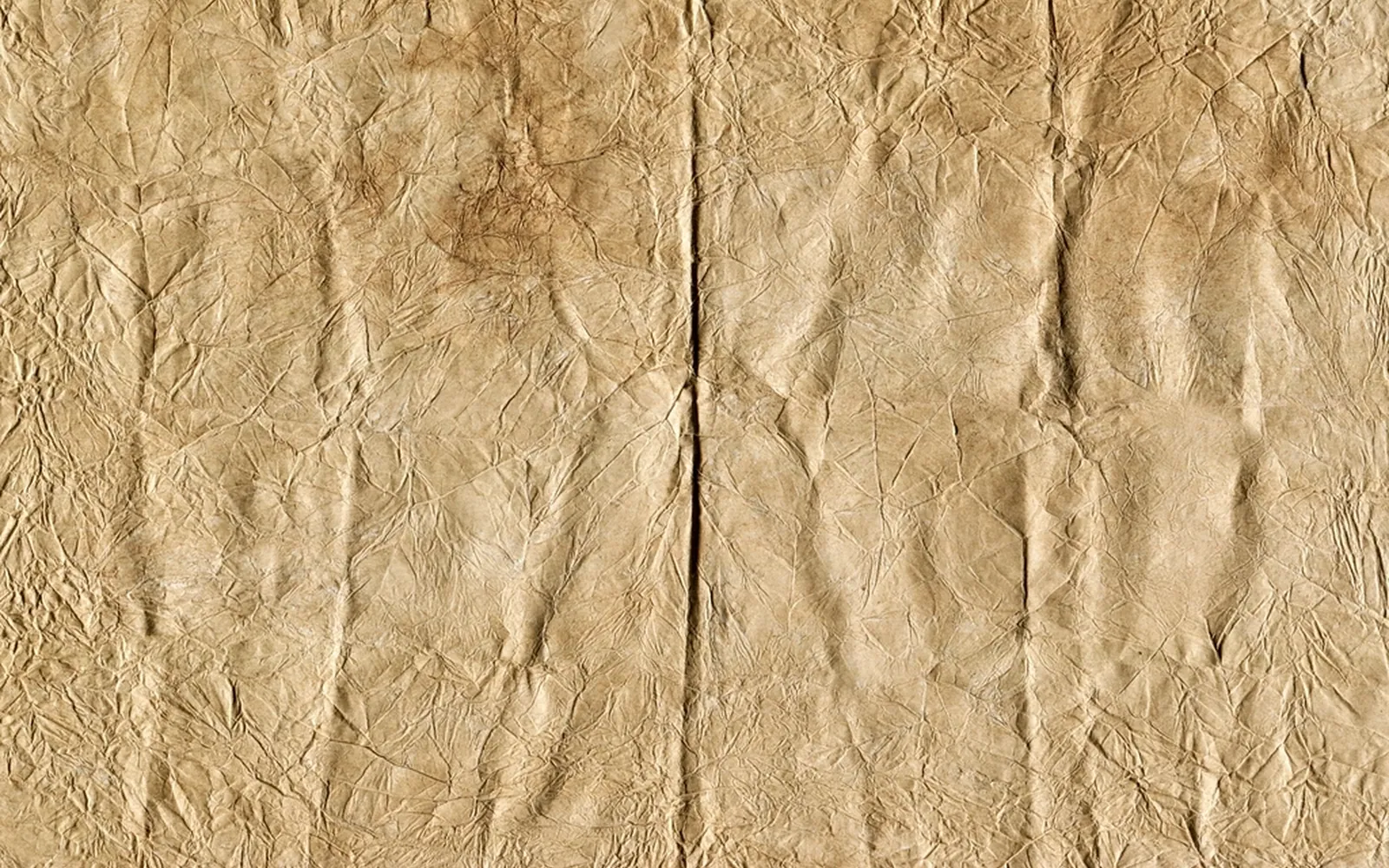
Froissage fits squarely in this tradition. When the Czech artist Ladislav Novák crumpled, flattened and washed a sheet with ink, he produced a dense network of lines and facets. He then drew out heads, animals and hybrid creatures that seemed to be waiting in the creases. The crumpled sheet is an ideal generator of pareidolia because it combines long lines (which suggest outlines) with small facets (which suggest texture and shading).
Exercises to train your eye
Seeing images in random patterns gets easier with practice. Try these before or during a froissage session:
- Cloud and wall walk. Spend ten minutes outside looking for faces in clouds, bark, cracks and stains. Sketch three of them quickly.
- The quarter turn. Take a dry, ink-washed crumpled sheet and look at it in four orientations, two minutes each. Write down everything you see.
- Squint and frame. Squint to blur detail, or look through a small paper window. Large shapes become easier to read.
- The smallest change. Find a face and add only two marks, such as eyes, to make it visible to others. Stop there.
- Swap and compare. Exchange sheets with someone else and see what they find. Different people see different images in the same creases.
For the full method, follow our step-by-step froissage guide, and keep the first lesson of pareidolia in mind: look longer than you think you need to.
Three quick ways to make shapes worth looking into
Pareidolia needs raw material: a random pattern for the eye to work on. Froissage creases are one source, but three other simple techniques produce good material in minutes and suit classrooms:
- Blow painting. Drops of runny ink pushed with a straw split into branching lines that readily become trees, hair or creatures. See blow painting with straws.
- String pulling. A paint-soaked string pulled from a folded sheet leaves symmetrical, feathery shapes, close in spirit to Justinus Kerner’s inkblots. See string pull painting.
- Salt on watercolour. Salt dropped into a damp wash leaves starbursts and speckles that suggest night skies, snow or coral. See the watercolor salt technique.
Run the same looking exercise on each: turn the sheet four ways, write down every image you see, then develop only one with a few pen lines. Comparing the lists shows how different kinds of random pattern invite different kinds of images.
Frequently asked questions
What is pareidolia in art?
In art, pareidolia means deliberately using our tendency to see images in random patterns. An artist starts from stains, blots, smoke, rubbings or creases, looks until a face, creature or landscape appears, and then develops it.
Where does the word pareidolia come from?
It combines the Greek para (beside, alongside) and eidolon (image, form). The German psychiatrist Karl Ludwig Kahlbaum introduced the term Pareidolie in 1866, and it was rendered in English as pareidolia the following year.
What did Leonardo da Vinci say about stains on walls?
In his notes on painting, Leonardo advised that if you look at walls marked with stains or made of mixed stones you may see landscapes, battles, strange faces and figures, and that a painter can use these to stimulate invention.
Is the Rorschach test related to pareidolia?
Yes. The Rorschach test, published by the Swiss psychiatrist Hermann Rorschach in 1921 with ten inkblot cards, uses the tendency to see forms in blots as a projective psychological test. Inkblot art by Justinus Kerner predates it.
How does froissage use pareidolia?
A crumpled, flattened and ink-washed sheet is full of random lines and facets. The artist turns it around until the creases suggest a face, animal or landscape, then strengthens that image with pen or brush.
Sources
Editorial team
The Froissage.com editorial team researches the history of froissage from museum, encyclopedia and publisher sources and writes practical guides to the technique.