Artists
Froissage Examples: Gallery and Where to See Real Works
Written by Froissage Editorial Team · Updated
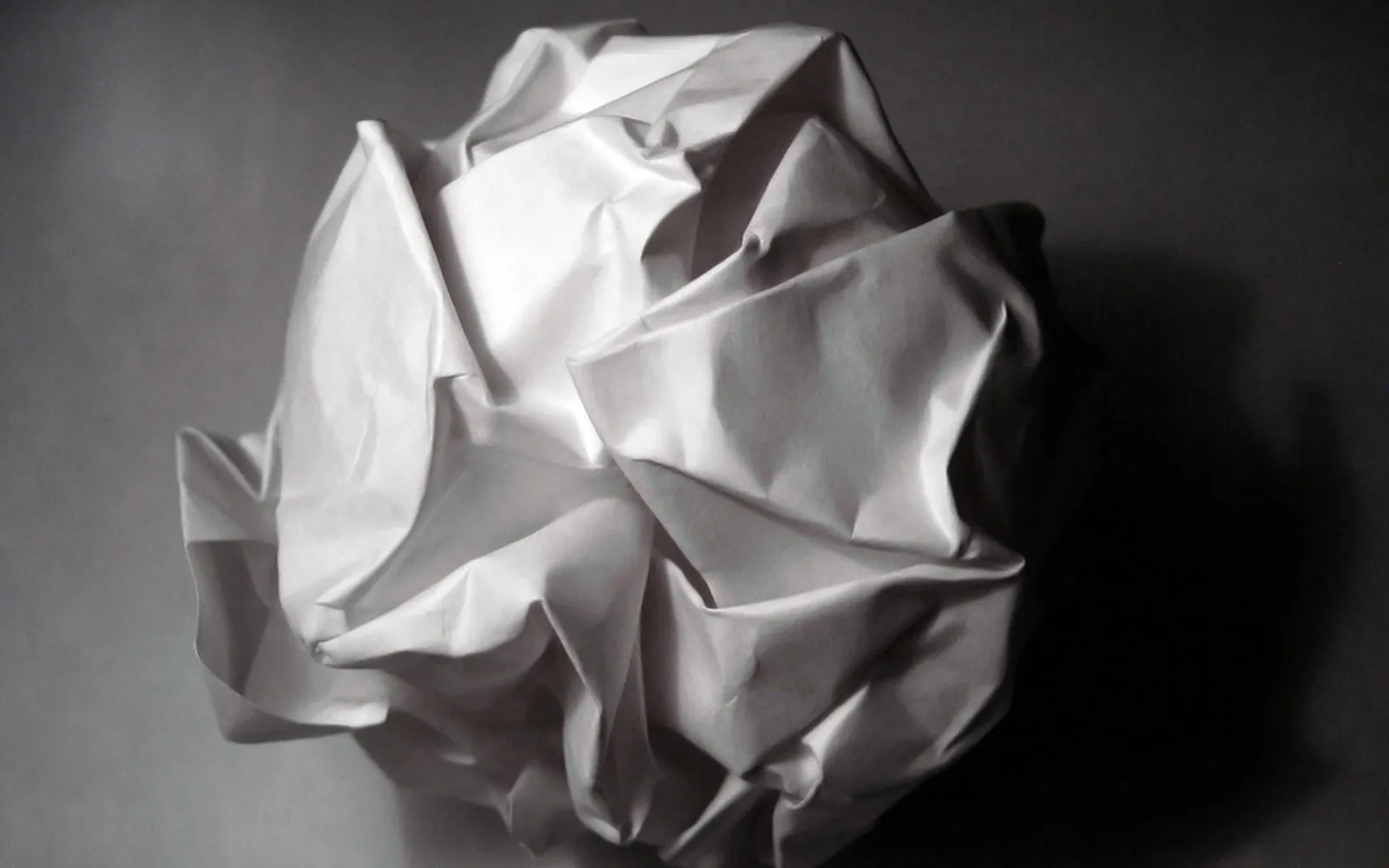
This page collects froissage examples in two ways. First, a set of openly licensed photographs of crumpled paper, which show clearly how creases form, catch light and hold colour. Second, a guide to finding real froissage artworks by Ladislav Novák, Jiří Kolář and others in museum collections, which we link to rather than copy because those works are still in copyright.
The earlier version of this page used images taken from other websites without a clear licence. We have replaced them with credited photographs.
Studying crumpled paper
Before you make a froissage, it helps to look closely at how paper behaves. Notice in the photographs below:
- Facets. Tight crumpling breaks the sheet into many small flat planes.
- Ridges and valleys. Light catches the ridges; shadows fill the valleys.
- Line networks. Creases meet at angles, forming a pattern like a map or cracked earth.
- Paper weight. Thin paper gives dense, fine creases; heavier paper gives broad folds.
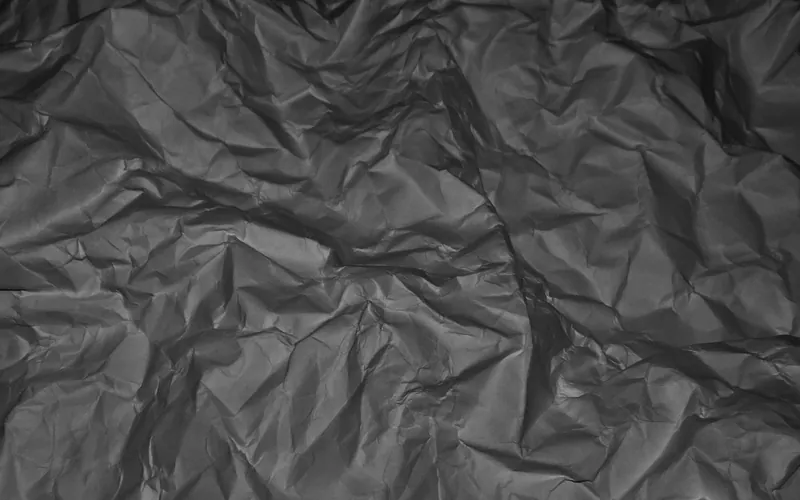
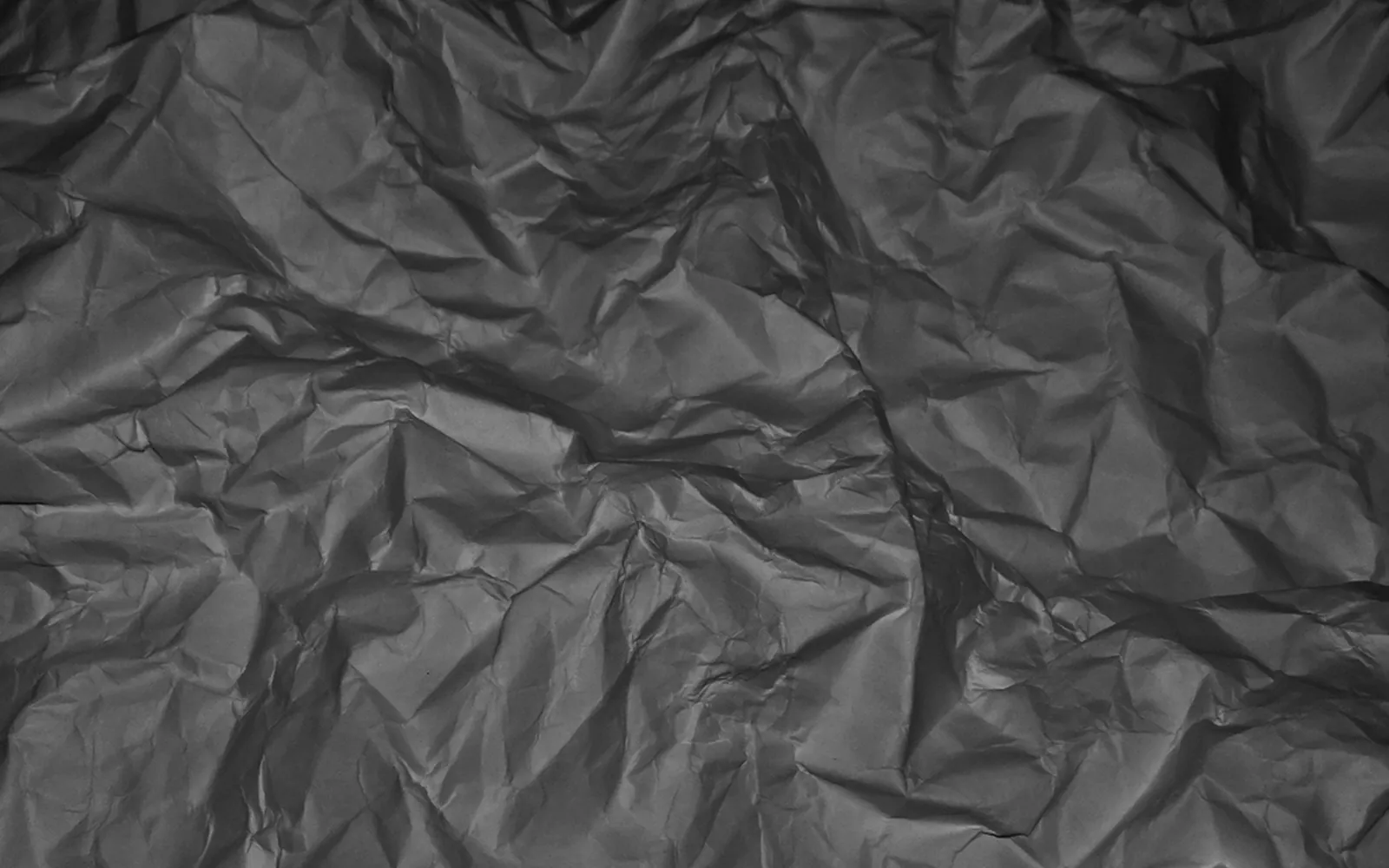
Dense creases in thin dark paper. Photo: rawpixel, CC0, via Openverse.
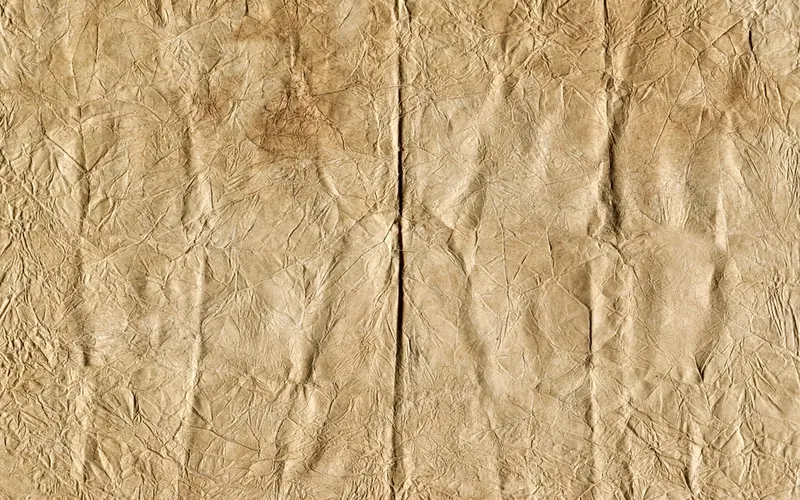
Fine creases in old brown paper, the kind of network a wash would reveal. Photo: Ake, CC0, via Openverse.
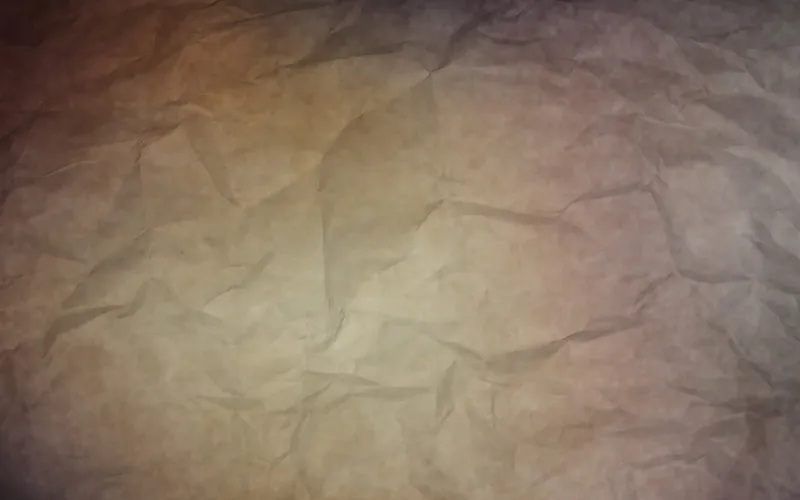
Coloured light on crumpled paper shows how ridges and valleys separate. Photo: CapturedbyKC, CC BY 2.0, via Openverse.
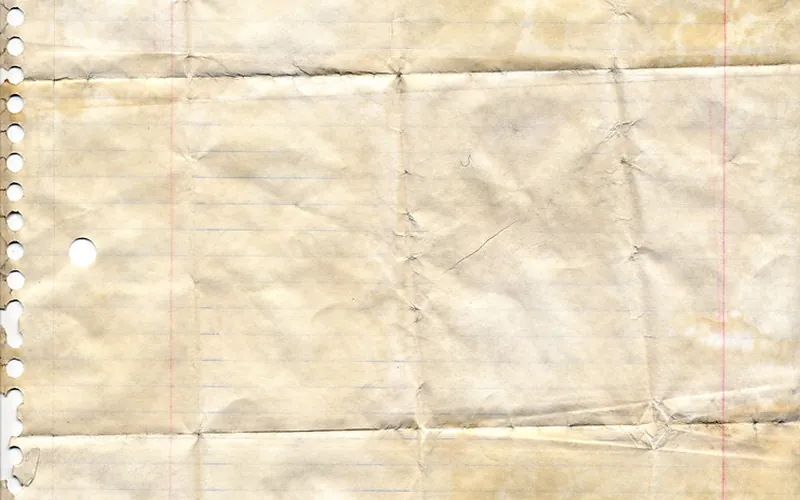
Folded rather than crumpled: straight fold lines combined with softer creases. Photo: Matt Gruber, CC BY 2.0, via Openverse.
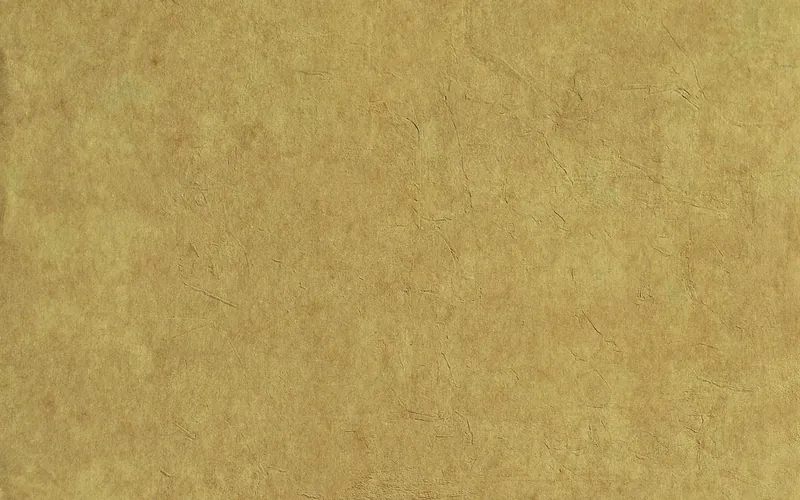
Heavier paper forms fewer, broader creases. Photo: *nacnud*, CC BY 2.0, via Openverse.
Relatives of froissage
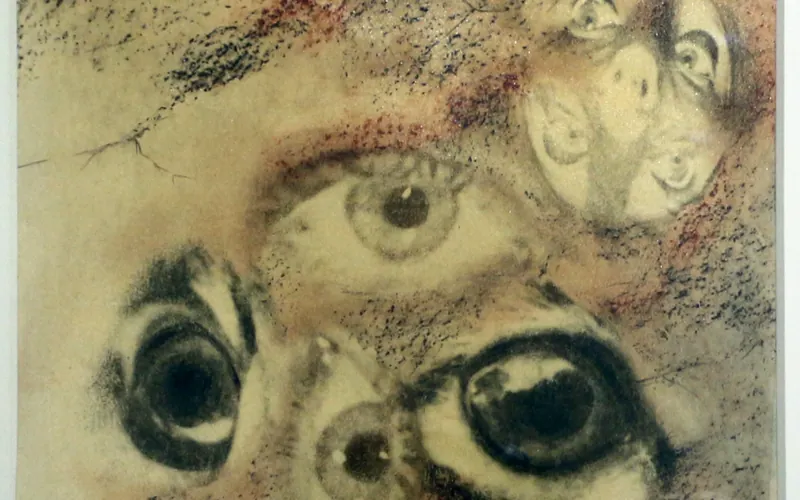
Jindřich Štyrský, decalcomania, 1936. A Czech surrealist chance technique close in spirit to froissage. Photo: Sailko, CC BY 3.0, via Openverse. Štyrský died in 1942 and the artwork is in the public domain.
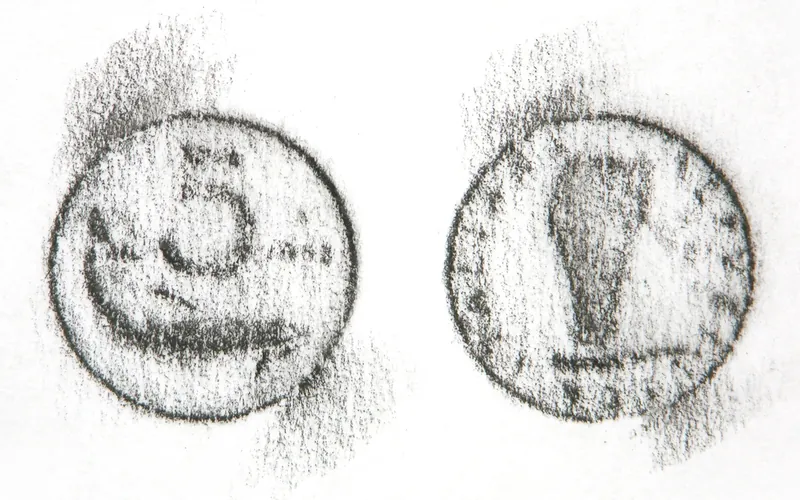
Frottage: a rubbing that records the surface beneath the paper. Photo: Nicola L.K., CC BY-SA 3.0, via Openverse.
Read more in froissage vs frottage and Czech surrealism and froissage.
Where to see real froissage
Ladislav Novák
According to artlist.cz, Novák’s work is in the National Gallery Prague, the Czech Museum of Fine Arts, the Prague City Gallery, the Moravian Gallery in Brno, the Gallery of Modern Art in Hradec Králové, the Karlovy Vary Art Gallery, Museum Schwarz in Milan and the Sackner Archive of Visual and Concrete Poetry. The Slovak National Gallery’s Web umenia site has an article on Kolář and Novák with images of several works, including froissages (froasáž) and alchemages (alchymáž).
How to search: Go to the National Gallery Prague’s online collections and search for “Novák, Ladislav”, or search Web umenia for “Ladislav Novák”. Try the Czech terms froasáž and alchymáž as keywords.
Jiří Kolář
Kolář’s work is held widely, with major holdings in Czech public collections. Search the same databases for “Kolář, Jiří”, and look for terms such as roláž (rollage), chiasmáž (chiasmage) and muchláž (crumplage). See Jiří Kolář’s collage techniques.
French artists
André-Pierre Arnal’s Froissage (1968), spray paint on unstretched canvas, can be seen on the Fondation Gandur pour l’Art website, which also has an audio commentary. Simon Hantaï’s pliage paintings are well represented in the Centre Pompidou’s online collection. See froissage artists.
Artist profiles and free-to-view precursors
If you want to look further than this gallery, each of the main artists now has a dedicated profile on this site, with a list of the collections that hold their work:
- Ladislav Novák, the Czech poet who developed froissage around 1964.
- Ladislas Kijno, the French painter whose crumpled papers date from 1946 and who later added spray paint. Public collections listed for him include the Musée national d’art moderne at the Centre Pompidou, the Musée Picasso in Antibes and the Fondation Maeght.
- Simon Hantaï, whose folded canvases (pliage) began in 1960. The Centre Pompidou holds a major group, including 19 works he donated in 2003.
These works are still in copyright, so the safest way to see them is through the museums’ own websites. Older chance-based drawings are another matter. Victor Hugo’s ink-wash drawings, made with blots, stencils and imprints, are in the public domain, and museums such as the Metropolitan Museum of Art publish high-resolution images of them under open access. They make a useful comparison with froissage, because Hugo also let accidents start his images. See our page on Victor Hugo’s ink drawings.
Share your own
We are building this gallery slowly with images we can license properly. If you have made a froissage and would like it considered, write to us through the contact page with a link to the image, confirmation that it is your own work, and the credit you would like. We publish nothing without the maker’s permission.
Frequently asked questions
Where can I see examples of froissage art online?
Search the online collections of the National Gallery Prague and the Slovak National Gallery (Web umenia) for Ladislav Novák or Jiří Kolář, or search for the term froissage or froasáž. Museum sites show authorised images with captions and dates.
Why don't you show Novák's froissages here?
Their works are protected by copyright, which normally lasts 70 years after the artist's death in the European Union. We link to museum collections that hold the rights or licences to show them.
Can I use the photos on this page?
Each photo has its own licence, shown in its credit. CC0 photos can be reused freely; CC BY and CC BY-SA photos require credit to the photographer, and CC BY-SA also requires sharing adaptations under the same licence.
Sources
Editorial team
The Froissage.com editorial team researches the history of froissage from museum, encyclopedia and publisher sources and writes practical guides to the technique.