History
Fumage Art Technique: Drawing and Painting With Smoke
Written by Froissage Editorial Team · Updated
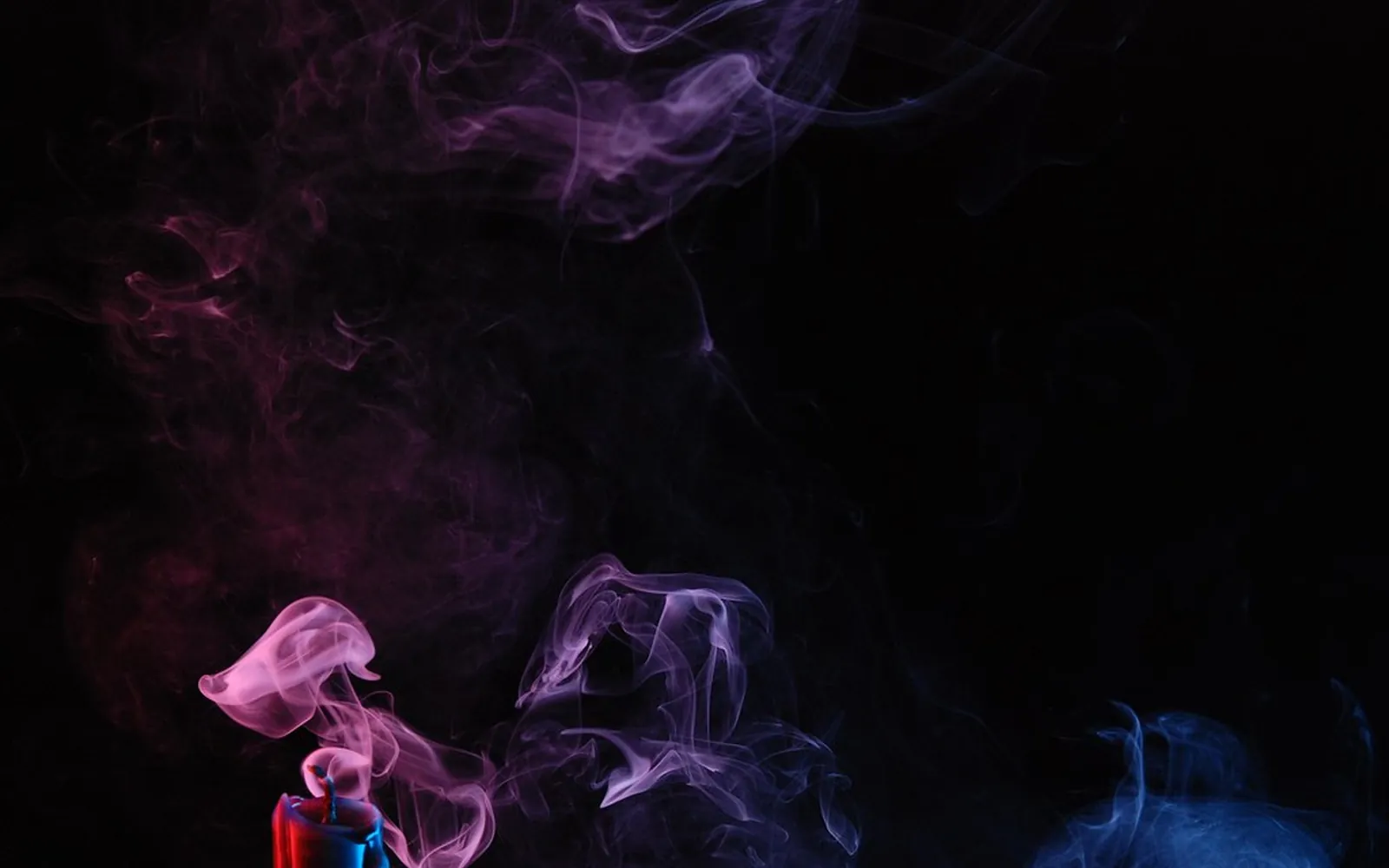
The fumage art technique turns smoke into a drawing tool. An artist holds a sheet of paper or a canvas over a candle or an oil lamp, and the soot settles in soft, cloudy marks that no pencil could make. Like froissage and frottage, fumage starts with a mark the artist does not fully control and then asks: what can I see in it? This guide explains where fumage comes from, who used it, how the Czech froissage pioneer Ladislav Novák fits into the story, and how adults can try it safely.
What fumage is
The word is French for “smoking”, as in smoking fish or meat. Tate defines fumage as painting with smoke from a lighted candle into a ground of wet paint. In practice artists have used it in several ways:
- passing dry paper or card over a flame so that soot settles directly on the surface;
- smoking a wet ground of paint, so that the soot sinks into it and is fixed as the paint dries;
- smoking a surface and then scraping or lifting soot away to draw light lines.
The result is typically hazy and atmospheric. Tate notes that fumage produces images that suggest dreams and apparitions, which is exactly why it appealed to the Surrealists.
Wolfgang Paalen and the Surrealists
The painter most closely linked with fumage is Wolfgang Paalen (1905-1959), born in Vienna, who joined the Surrealist movement in Paris in the 1930s. Tate credits him with inventing the technique in the late 1930s. According to Wikipedia, his first fumage, Dictated by a Candle, was shown at the International Surrealist Exhibition in London in 1936, and he developed smoke marks on canvas in 1936 and 1937, usually painting over them in oil. His Pays interdit (Forbidden Land) of 1936-37 integrates fumage in its lower part. A 1938 exhibition at the Galerie Renou et Colle in Paris made his reputation as a painter.
Paalen was not the first person ever to decorate with soot. Wikipedia records an American clock decorated with smoke patterns by the clockmaker Silas Hoadley around 1810-1820. What Paalen did was to turn smoke into a method of image-making within the Surrealist search for automatism.
Others followed. Tate notes that Salvador Dalí appears to have used fumage in Autumnal Cannibalism (1936), and Wikipedia lists Roberto Matta among its early users; Dalí called his smoke technique sfumato. Later artists including Alberto Burri, Yves Klein and Otto Piene used smoke and fire in very different ways. We do not reproduce any of these works because they are still in copyright; museum websites such as Tate show examples.
For the wider family of chance techniques, see our guide to Surrealist art techniques and the dedicated page on decalcomania.
Ladislav Novák’s smoke drawings
Fumage is part of the froissage story too. The Czech poet and artist Ladislav Novák (1925-1999), who developed froissage in the 1960s, kept experimenting with chance methods throughout his life. The Czech art database artlist.cz lists among his techniques drawings made with candle smoke, from the early 1970s, alongside froissage, alchemage and poured paint. For Novák, smoke and creased paper did the same job: they produced an unplanned field of marks from which his pen could pull out figures. Read more in our profile of Ladislav Novák and in the history of froissage.
Why smoke works as a starting point
A smoke mark has no hard edges. It thickens and fades, and it often forms soft ripples where the flame flickered. The eye reads these gradients as depth: clouds, caves, ghostly heads, distant mountains. That is the same habit of seeing images in random patterns that makes froissage work, a tendency explored on our page about pareidolia in art. Where froissage gives a network of sharp lines, fumage gives a fog. Some artists combine them, smoking a crumpled sheet so the soot catches on the ridges and leaves the hollows pale.
Looking at fumage: questions to ask
Whether you are looking at a museum image of a Paalen fumage or at your own experiment, a few questions help:
- Where is the smoke densest? Dense soot reads as near, dark and heavy; thin soot reads as distant or airy.
- What did the artist add or take away? In many fumages the artist lifted soot with a brush, eraser or stick, or added painted forms. Try to tell the accidental marks from the deliberate ones.
- What do you see first? Faces, figures, landscapes or nothing at all? Compare your answer with someone else’s; the same smoke often suggests different images to different viewers.
- How does it compare with other chance marks? Set a fumage beside a froissage, a frottage and a drip painting. Smoke gives soft gradients, crumpling gives a network of lines, rubbing gives texture and dripping gives trails. Each invites a different kind of image.
These questions also work for photographs. In 1933 the magazine Minotaure published Brassaï’s close-ups of rolled and crumpled scraps, presented as accidental sculptures; see Brassaï’s Involuntary Sculptures. The idea is the same: an unplanned process makes the form, and the artist’s work is to notice it.
Materials and safety
Fumage needs an open flame, so treat it as an adult technique.
- Support: heavy paper or card (200 gsm and above), or a primed board. Thin paper scorches and can catch fire.
- Flame: a plain household candle in a stable holder, or an oil lamp. Never use aerosols or solvents near the flame.
- Tools: a soft brush, a kneaded eraser and a pointed stick or brush handle for lifting soot.
- Fixative: a spray fixative for charcoal and pastel, applied outdoors or in a well-ventilated room after the candle is out.
- Safety: a clear, non-flammable work surface, nothing flammable nearby, hair tied back, and a fire blanket or bowl of water within reach. Never leave the flame unattended.
Soot is loose and smudges easily, so handle the sheet by its edges until it is fixed, and store finished work under glass or between sheets of clean paper. Our guide to displaying froissage art covers framing works on paper.
A safer alternative for classes
Schools rarely allow open flames in art rooms, and fumage is not suitable for children. To teach the same idea, let pupils rub powdered charcoal into paper with a tissue, or use froissage or frottage. Both give unpredictable textures to interpret, with no fire involved. Showing pupils images of Paalen’s fumages from a museum website and then making a froissage is an easy way to connect history and practice.
Frequently asked questions
What is fumage in art?
Fumage is a technique in which an artist moves paper or canvas over the flame of a candle or oil lamp so that soot settles on the surface. The smoky marks are then left as they are or developed into images with paint or ink.
Who invented fumage?
Tate credits the Austrian-born Surrealist Wolfgang Paalen with inventing fumage as an art technique in the 1930s. Smoke decoration existed before him: Wikipedia records an American clock decorated with soot patterns by Silas Hoadley around 1810-1820.
Did Salvador Dalí use fumage?
Yes. Tate notes that Dalí appears to have used fumage in Autumnal Cannibalism (1936), and Wikipedia records that he called his smoke technique sfumato.
How do you fix a fumage drawing?
Soot is loose and smudges at a touch. Artists spray the finished sheet with a fixative, applied lightly in several coats outdoors or in a ventilated room, and then keep it under glass or in a folder.
Can children do fumage?
Fumage uses an open flame, so it is not a technique for young children. In a classroom, froissage, frottage or rubbing charcoal dust into paper give similar smoky, chance-based textures without fire.
Is fumage the same as drip painting or other chance techniques?
It belongs to the same family. Fumage, frottage, decalcomania, drip painting and froissage all let a material process produce the first marks, which the artist then interprets. What makes fumage different is that the mark is made of soot, with soft, foggy edges rather than lines or textures.
Sources
Editorial team
The Froissage.com editorial team researches the history of froissage from museum, encyclopedia and publisher sources and writes practical guides to the technique.