History
Czech Surrealism and Froissage: The Prague Background
Written by Froissage Editorial Team · Updated
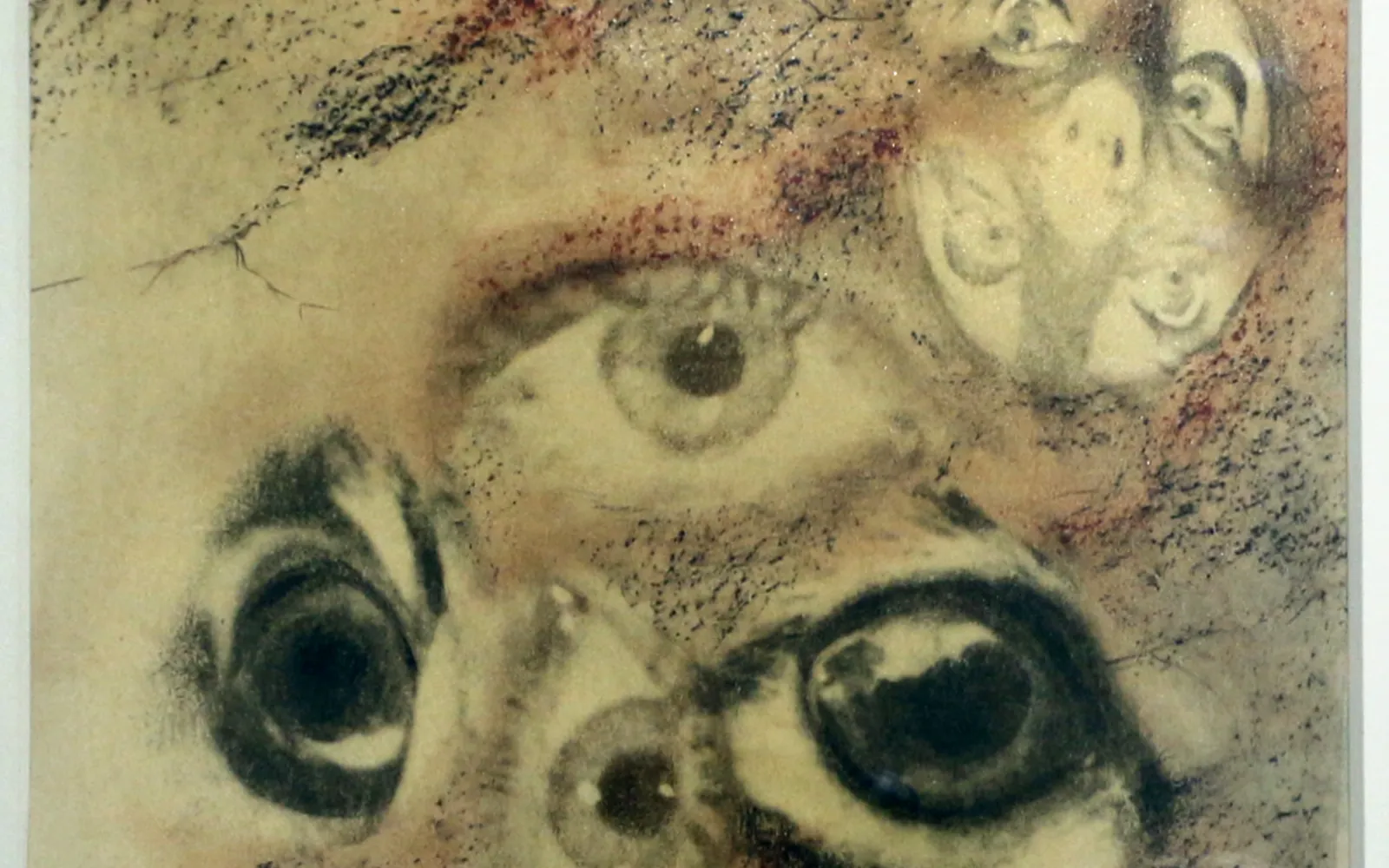
Czech surrealism is the soil froissage grew from. Paris was the capital of the movement, but Prague became its second home in the 1930s, and the habits it taught, trusting chance, mixing poetry with images and turning everyday material into something strange, carried on in Czech art long after the original group broke up. Ladislav Novák, the artist credited with developing froissage, began his artistic life in a student surrealist group.
From Devětsil to surrealism
In the 1920s the leading Czech avant-garde association was Devětsil, a broad group of poets, painters, architects and theatre people. Two of its painters, Jindřich Štyrský and Toyen (Marie Čermínová), developed a style they called artificialism, and the poet Vítězslav Nezval and the theorist Karel Teige were among its most prominent voices.
By the early 1930s Nezval had grown close to André Breton and Paul Éluard in Paris, and he became the driving force behind a Czech surrealist group.
The Surrealist Group in Czechoslovakia (1934)
The group was announced on 21 March 1934 with the manifesto Surrealismus v ČSR (Surrealism in the Czechoslovak Republic). It was one of the first surrealist groups established outside France. Accounts list among the early members Nezval, Štyrský, Toyen, the sculptor Vincenc Makovský, the theatre director Jindřich Honzl, the poet Konstantin Biebl, the composer Jaroslav Ježek and the psychoanalytic theorist Bohuslav Brouk. Karel Teige joined a few weeks later.
According to the Czech Academy of Sciences’ database of art exhibitions, the group’s first exhibition opened in January 1935 in the Functionalist Mánes building in Prague. Breton and Éluard visited Prague in 1935, which strengthened the links between the two groups.
Chance techniques in Prague
Czech surrealists used the same toolkit as their Paris colleagues. Štyrský in particular made decalcomanias in the mid-1930s: gouache pressed between sheets and pulled apart, then developed into images. The 1936 work illustrated above, with eyes emerging from a mottled texture, shows the typical approach: a chance texture, then a few deliberate additions that turn it into an image. This is exactly the logic of froissage. The surrealist art techniques page explains decalcomania and its relatives.
Collage was also central. Štyrský and Toyen made collages and photomontages, and Teige produced a large body of collages. This prepared the ground for the collage inventions of Jiří Kolář in the next generation.
Prague, Paris and the spread of chance techniques
The mid-1930s were the years when the Surrealist chance techniques multiplied, and Prague was part of that exchange. In 1936 Óscar Domínguez introduced decalcomania to the Paris group, and the same year Štyrský was making decalcomanias of his own, like the one shown above. That year Wolfgang Paalen’s first fumage, a picture made with candle smoke, was shown at the International Surrealist Exhibition in London. Max Ernst’s frottage, dating from 1925, was by then a well-known method.
What these techniques share is a two-stage process: a texture produced by a physical procedure the artist does not fully control, followed by interpretation. Decalcomania gives branching, coral-like textures; fumage gives soft clouds of soot; frottage gives the grain of whatever lies under the paper. Our guides to the decalcomania art technique and the fumage art technique explain how each is done.
The connection with froissage is direct. Ladislav Novák, who grew up with this Czech surrealist inheritance, later used both crumpled paper and candle smoke, which the Czech art database artlist.cz lists among his techniques from the early 1970s. Froissage can be seen as his own addition to the same toolkit.
War, splits and the post-war generation
The group did not survive the following decade intact. Nezval left in 1938 and the remaining members continued without him. The German occupation of 1939-1945 forced surrealists underground; Štyrský died in 1942, and Toyen emigrated to Paris in 1947. After the communist takeover of 1948, surrealism had no official place in Czechoslovak culture, though small circles continued to work privately.
The post-war experimental generation inherited this tradition. Ladislav Novák, born in 1925, had joined a student surrealist group in Třebíč and made contact with Nezval, according to Twisted Spoon Press. Jiří Kolář, born in 1914, came from the circle of Group 42. Together with Josef Hiršal they formed the first Czech Group of Experimental Poetry, and in the 1960s both moved into visual work. The Slovak National Gallery describes Novák’s froissages as drawing on surrealist chance: crumpled paper produced random folds which he then developed.
How froissage continues the tradition
Froissage keeps three core surrealist ideas:
- Chance as a starting point. The crumple creates a pattern no one designed.
- Interpretation. The artist finds images in it, as Štyrský did in his decalcomanias.
- Ordinary material. Waste paper and old prints become art, much as surrealist collage reused engravings and catalogues.
What it adds is an extreme economy of means, suited to an artist working in a small town under a regime that gave experimental art no official space. For the full story, read the history of froissage and the profiles of Ladislav Novák and Jiří Kolář.
Seeing Czech surrealism today
The National Gallery Prague holds major works by Štyrský, Toyen and Teige, and many of Novák’s and Kolář’s works. The Museum Kampa in Prague focuses on Central European modern art and held a solo exhibition of Novák’s work in 2010. See our froissage gallery for tips on finding the works online and in person.
Frequently asked questions
When did surrealism start in Czechoslovakia?
The Surrealist Group in Czechoslovakia was announced in March 1934 with a manifesto, Surrealismus v ČSR. Its members had been active in the avant-garde group Devětsil during the 1920s.
Who were the main Czech surrealists?
The founding generation included the poet Vítězslav Nezval, the painters Jindřich Štyrský and Toyen, the theatre director Jindřich Honzl, the psychoanalytic theorist Bohuslav Brouk and the composer Jaroslav Ježek, with Karel Teige joining soon after.
Was froissage a Czech surrealist technique?
Froissage was developed in the 1960s by Ladislav Novák, who had been part of a student surrealist group in his youth. It grew out of Czech surrealism's interest in chance, but it was not one of the techniques of the original 1930s group.
Sources
- Decalcomania - Wikipedia
- Fumage - Wikipedia
- First Exhibition of the Surrealist Group in Czechoslovakia - Database of Art Exhibitions, Czech Academy of Sciences
- Jindřich Štyrský - Wikipedia
- Vítězslav Nezval - Wikipedia
- Decalcomania - Tate art terms
- Ladislav Novák - Twisted Spoon Press
- Jiří Kolář and Ladislav Novák - Slovak National Gallery (Web umenia)
Editorial team
The Froissage.com editorial team researches the history of froissage from museum, encyclopedia and publisher sources and writes practical guides to the technique.