Technique
The Science of Crumpled Paper: Ridges, Facets and Creases
Written by Froissage Editorial Team · Updated
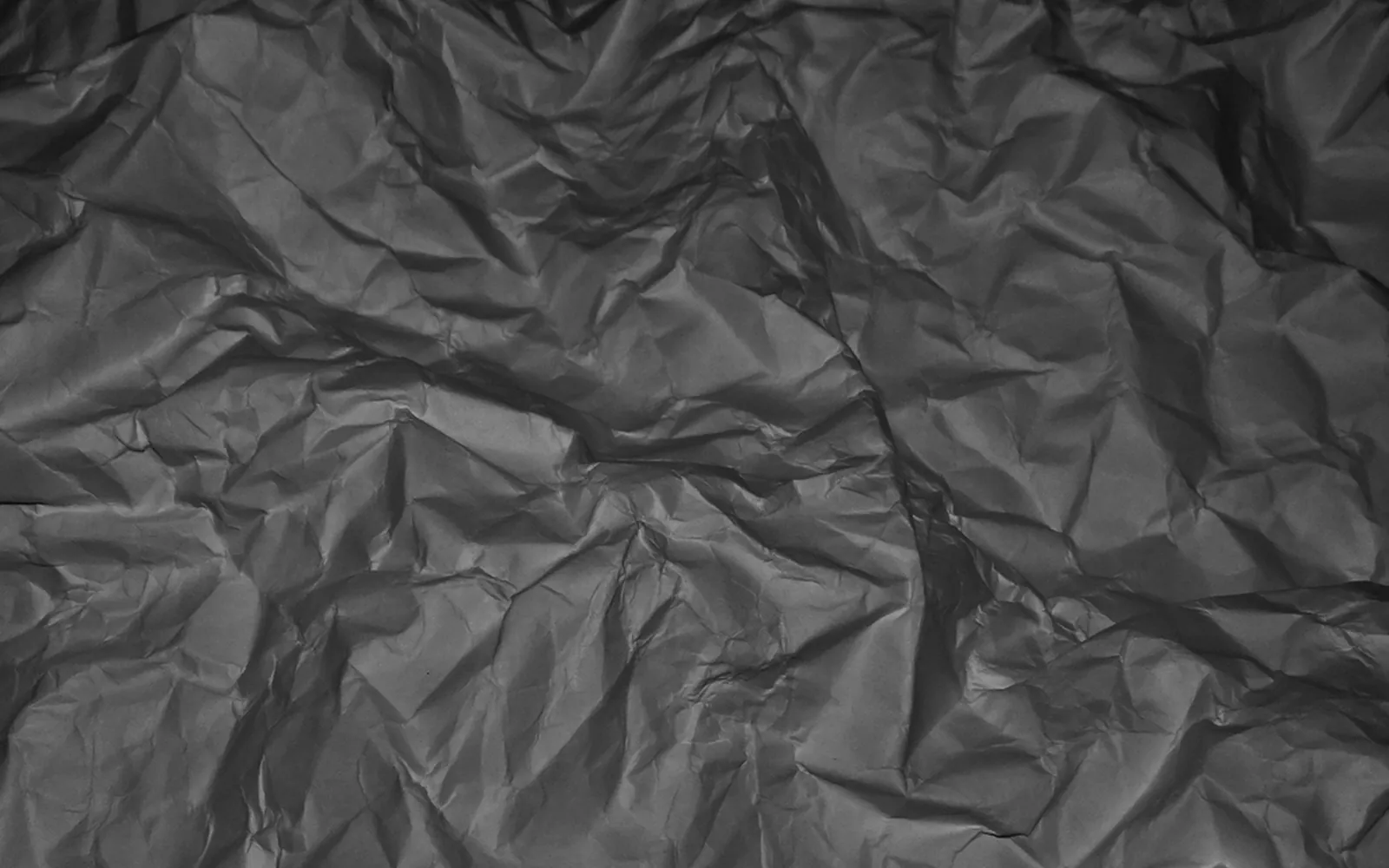
The science of crumpled paper turns out to be a serious research topic. Physicists and engineers study crumpling because it is everywhere, from car bodies in collisions to the folding of membranes, and because a single crumpled sheet is surprisingly hard to describe. For anyone who practises froissage, the drawing and painting technique built on crumpled paper, the findings are more than a curiosity. They explain why the first crumple matters most, why every sheet gives a different image and why creases never quite go away.
This page summarises what researchers have found, in plain language, with links to the original studies.
Ridges, facets and points
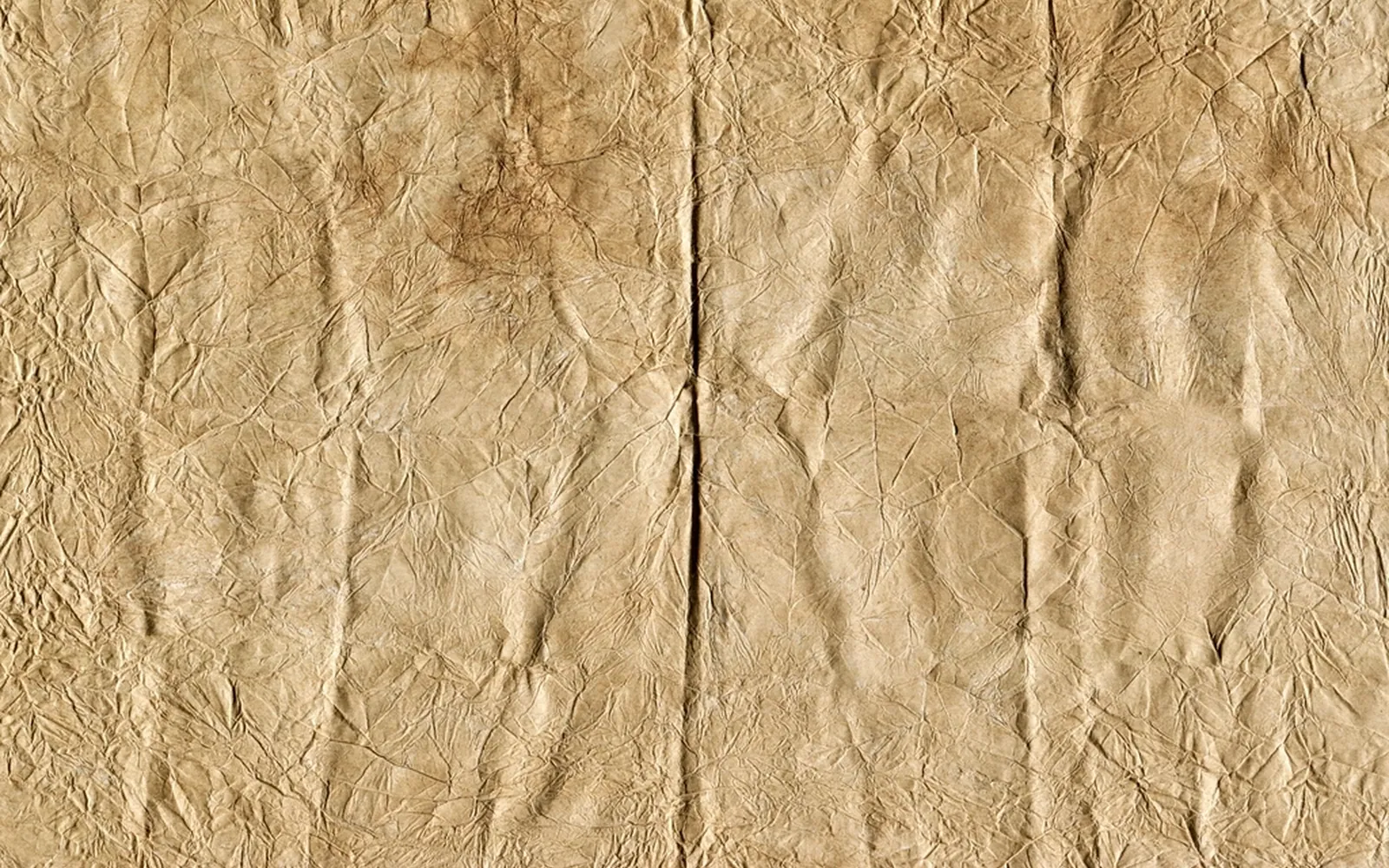
Open out a crumpled sheet and look at it in raking light. You will see a network of sharp lines, the ridges or creases, dividing the surface into many flat or gently curved patches, the facets. Where several ridges meet, the paper often forms a tight, sharp point. Wikipedia’s overview of crumpling describes the result as a random network of ridges and facets with variable density.
Why does paper behave like this, rather than curving smoothly like a cloth? The key is that a sheet of paper bends very easily but hardly stretches at all. Squeeze a sheet into a smaller space and it cannot shrink; it can only bend. The cheapest way, in terms of energy, to fit a non-stretching sheet into a small space is to keep most of it flat and concentrate the bending into narrow ridges and points. Physicists have studied these points in detail; they are often described as cone-like singularities, because the paper around each one bends into a shape close to a cone.
At the ridges, the bending is so sharp that the material is permanently deformed. The research below calls the crease network the “damage” in the sheet, which is a good way to think of it: creases are a record of where the paper gave way.
The Harvard crumpling experiments
A team at Harvard University, including Omer Gottesman, Jovana Andrejevic, Chris Rycroft and Shmuel Rubinstein, published a study in Communications Physics in 2018 called “A state variable for crumpled thin sheets”. They worked with thin sheets of Mylar, a plastic film that creases in a similar way to paper, and crumpled them repeatedly, opening them out and measuring the crease network each time.
Their main findings, as stated in the paper’s abstract:
- The evolution of the damage during crumpling can largely be described by a single global quantity, the total length of the creases.
- The process is deterministic: how many new creases form depends on the current state of the crease network, not on how the sheet was crumpled before.
- The same quantity also describes what happens when a sheet is crumpled for the first time.
In other words, despite the infinite number of shapes a crumpled sheet can take, there is a simple rule underneath. A Harvard news article on the research reports that each sheet developed a unique crease pattern, but the total crease length on every sheet grew logarithmically: quickly at first, then more and more slowly with each additional crumple.
Crumpling as fragmentation
In 2021 the team, with Jovana Andrejevic as first author and Lisa Lee, Shmuel Rubinstein and Chris Rycroft as co-authors, published a follow-up in Nature Communications: “A model for the fragmentation kinetics of crumpled thin sheets”. Instead of looking at the creases, they looked at the flat facets between them.
They found that each new crumpling breaks the larger facets into several smaller ones, much as rocks fragment into pebbles. By applying the mathematics of fragmentation, they built a model that reproduces the logarithmic growth of crease length. The Harvard article quotes Rycroft comparing the process to a pebble on a beach breaking into smaller pieces over time. It also notes a detail that will please artists: the crease networks were so chaotic that automated image analysis struggled, so Andrejevic, who is also an artist, traced the creases by hand.
Why crumpled balls are strong
A crumpled ball of paper is full of air pockets, yet it is surprisingly hard to squash further. Researchers describe crumpled structures as having unusually high compressive strength for their density, and attribute this partly to friction where flat facets press against each other inside the ball. Engineers have looked at crumpled sheets for uses such as absorbing impacts. You can feel the effect yourself: the first squeeze of a sheet is easy, the last is hard work.
What this means for froissage
The science lines up neatly with what artists notice in the studio.
The first crumple matters most
Because crease length grows logarithmically, most of the network is created in the first few crumples. Crumpling a sheet once firmly produces a bold structure of large facets. Crumpling it again and again adds ever finer creases and breaks the big facets into smaller ones, which gives a denser, more textile-like surface. In how to do froissage we suggest choosing deliberately: one crumple for big shapes such as landscapes, several for fine texture.
Every sheet is unique
Each sheet produced a unique crease pattern in the experiments. That is the chance element at the heart of froissage and of the other techniques described in chance in art. You cannot plan the exact network, only its general density.
Creases are permanent
Since a crease is a line of permanent deformation, it cannot be fully erased. Our guide on how to flatten crumpled paper explains how to make a sheet lie flat for framing or scanning, but the lines will always show under raking light. For froissage that is an advantage: the creases are the drawing.
Ink follows the damage
When you wash ink across an opened sheet, the creases behave differently from the facets. In practice, the roughened fibres along a crease tend to take up more ink, and pools gather in the valleys. That is why the network shows up so clearly in froissage with ink and watercolour.
Material matters
The experiments used Mylar, but the principle applies to any thin sheet that bends easily and hardly stretches: paper, foil, thin plastic. Each crumples a little differently. Foil keeps sharp creases and holds its shape (see aluminum foil art), soft tissue makes fine, soft creases, and heavy cartridge paper gives fewer, bolder ridges. Our froissage materials guide compares papers.
A simple experiment to try
You can see the logarithmic effect for yourself with a few sheets of plain paper and a pencil:
- Crumple a sheet once, open it out and lay it flat.
- Choose a 5 cm square in the middle and count how many crease lines cross its edges.
- Crumple the same sheet again, open it and count again in the same square. Repeat five or six times.
- Plot the counts on a graph. The numbers usually rise quickly at first and then level off.
This is only a rough classroom version of the measurements in the research, but it shows the same trend, and it makes a good link between art and science lessons. The crumpled paper watershed model is another way to use the same sheet in a science context.
Seeing the facets
The facet structure is easiest to see with a single, low light from one side, which turns each plane into a distinct value of light or shadow. That is useful for photographing and for drawing crumpled paper; see crumpled paper texture photography and how to draw crumpled paper.
Frequently asked questions
Why does crumpled paper form sharp creases instead of smooth curves?
Paper bends easily but hardly stretches. When a sheet is squeezed into a smaller space, it can only fit by bending, and the bending concentrates into narrow ridges and sharp points where the material is permanently deformed. Between them, the paper stays nearly flat.
What did the Harvard crumpling experiments find?
In a 2018 study in Communications Physics, Gottesman, Andrejevic, Rycroft and Rubinstein repeatedly crumpled thin Mylar sheets and measured the crease network. They found that its evolution could largely be described by one number, the total length of creases, and that the process depended on the current crease network rather than on the history of crumpling.
Does crumpling paper more times make many more creases?
At first, yes. Later crumplings add less and less. The researchers reported that total crease length grows roughly logarithmically with repeated crumpling, so the first few crumples create most of the crease network.
Why are crumpled paper balls so hard to squash?
Crumpled structures are unusually strong in compression for their density. Researchers attribute this partly to friction between the flat facets pressed against each other inside the ball.
Can I get rid of creases completely?
No. A crease is a place where the sheet has been permanently deformed. Flattening, humidifying and pressing can make paper lie flat and reduce creases, but the lines remain visible, especially in raking light.
Sources
- Gottesman, Andrejevic, Rycroft and Rubinstein, A state variable for crumpled thin sheets, Communications Physics (2018)
- Andrejevic, Lee, Rubinstein and Rycroft, A model for the fragmentation kinetics of crumpled thin sheets, Nature Communications (2021)
- Rock, paper, crumple - Harvard John A. Paulson School of Engineering and Applied Sciences (2021)
- Crumpling - Wikipedia
Editorial team
The Froissage.com editorial team researches the history of froissage from museum, encyclopedia and publisher sources and writes practical guides to the technique.