Artists
Ladislas Kijno Froissage: Crumpled Paper and Spray Paint
Written by Froissage Editorial Team · Updated
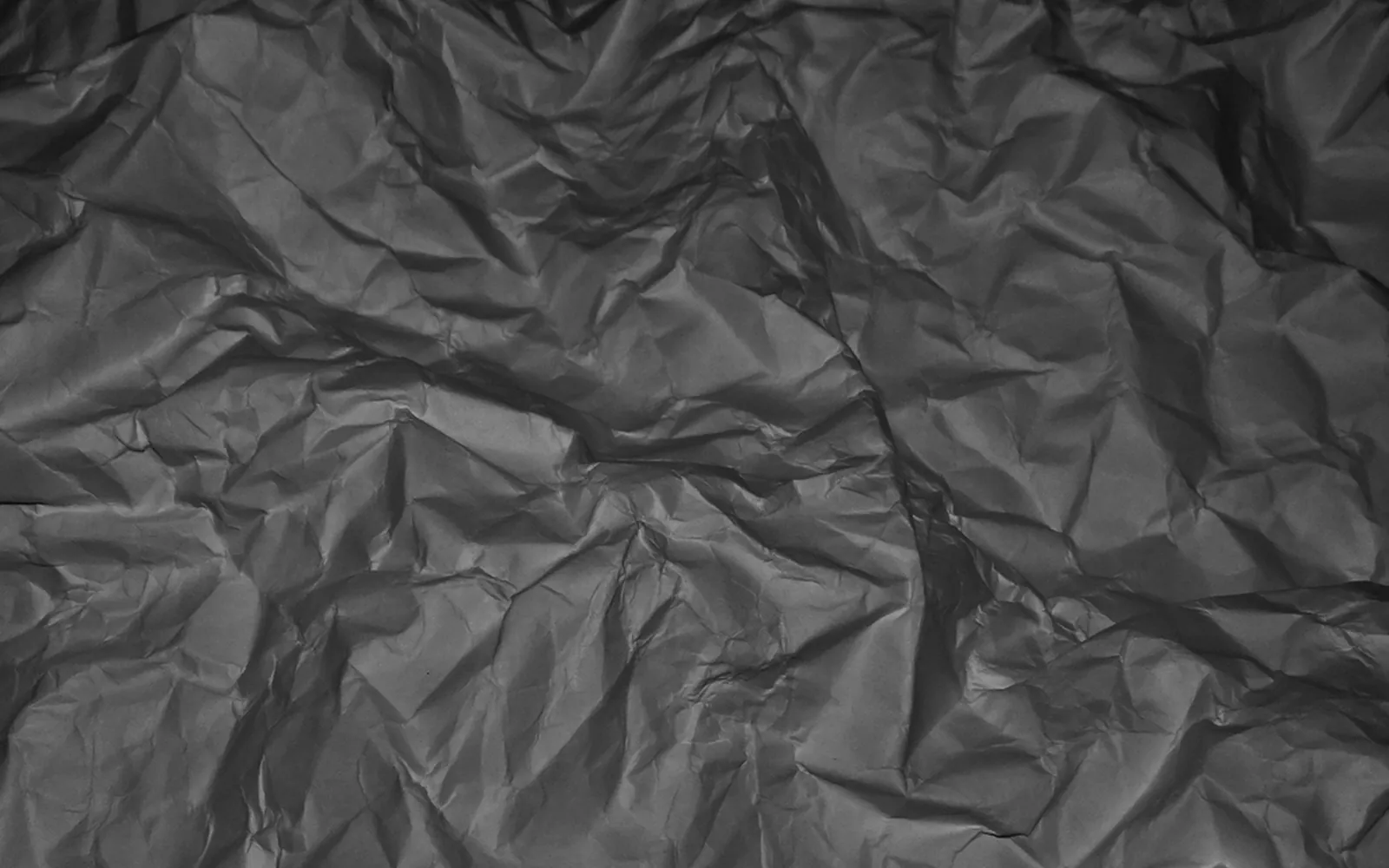
Search for Ladislas Kijno froissage and you reach the French side of crumpled-paper art. While the Czech poet Ladislav Novák was drawing figures out of creases in Třebíč, Kijno, a painter based near Paris, was building whole paintings from crumpled paper and spray paint. His name is closely tied to the word froissage in France, and his works are in major French museums. This profile sets out what reliable sources say about his life, his method and where to see his work.
From Warsaw to the mining country
Ladislas Kijno was born in Warsaw on 27 June 1921, to a Polish father and a French mother, according to the Encyclopaedia Universalis. In 1925 the family moved to Nœux-les-Mines, a coal-mining town in the Pas-de-Calais, where he grew up in modest circumstances. He studied at the Baudimont seminary in Arras and then at the Catholic University of Lille, where he followed the philosophy courses of Jean Grenier and Gabriel Marcel; Universalis records that he obtained a licence in theology in 1946.
Illness shaped his early career. Treated for tuberculosis, he spent long periods at the sanatoriums of the Plateau d’Assy in Haute-Savoie, until 1954. It was there that he turned seriously to painting, encouraged by the doctors and introduced to Van Gogh, Cézanne and Bonnard by the writer Pierre Marois. In 1949 he painted a Last Supper for the crypt of the church of Notre-Dame-de-Toute-Grâce at Assy, a church famous for its decoration by modern artists including Matisse, Braque, Léger, Rouault and Chagall.
The first crumpled papers
French Wikipedia dates his first experiments with crumpled papers (papiers froissés) to 1946, and Universalis places the beginning of his work with crumpled paper on canvas after that year. These early pieces combined abstract, ovoid forms in pure colours with black. Over the following decades, crumpling became the core of his practice and the reason he is described as one of the masters of froissage.
His first solo exhibition was held at the Galerie Saint-Placide in Paris in 1954. A year later he made a radical gesture: he burned about 250 canvases made over the previous two years and moved to Antibes. In 1957 Dor de la Souchère, curator of the museum in Antibes, organised the first major Kijno exhibition at the museum there.
Spray paint and the mature froissages
At the end of the 1950s Kijno settled in the Paris region. Universalis dates his first sprayings of paint from aerosol cans to this period, and French Wikipedia notes that he used spray painting more and more over the decades.
The combination is what makes a Kijno froissage recognisable. The crumpled paper, usually glued to canvas, provides a field of ridges and hollows. Spray paint, arriving at an angle, coats the raised facets and leaves the folds in shadow, so the sheet reads as a landscape of light. Instead of drawing into the creases with a pen, as Novák did, Kijno let colour fall on them. We do not reproduce his works, which are still in copyright; the museum collections listed below show examples online.
Themes, poets and public works
Kijno often worked with poets. He corresponded with Paul Claudel from 1943 and met Louis Aragon and Francis Ponge the same year. Universalis lists the wide range of subjects that run through his series: music (Mozart, Verdi, Charlie Parker), the wars in Algeria and Vietnam, Christ and the Buddha, journeys to China and the statues of Easter Island, and tributes to figures such as Angela Davis, Nelson Mandela, Gandhi, Nicolas de Staël and Yuri Gagarin.
He also made large public works. French Wikipedia lists façades for gymnasiums at Juvisy-sur-Orge (1967) and Savigny-sur-Orge (1975), a mosaic for a school in Saint-Étienne-du-Rouvray (1968), and the rose window of the portal of Notre-Dame-de-la-Treille cathedral in Lille, begun in the 1990s. He was invited to the Venice Biennale in 1980 with his cycle Théâtre de Neruda, and was given retrospectives at Le Havre (1971), the Palais des Beaux-Arts in Lille (2000) and the Russian Museum in Saint Petersburg (2006). He died in 2012 in Saint-Germain-en-Laye.
Kijno and Novák: two kinds of froissage
The two artists most associated with the word froissage worked in parallel and very differently:
| Ladislas Kijno | Ladislav Novák | |
|---|---|---|
| Country | France | Czechoslovakia |
| Start of crumpled works | 1946 | around 1964 |
| Support | Crumpled paper, often on canvas | Crumpled and flattened paper |
| Colour | Paint, later spray paint | Ink and watercolour |
| What the creases do | Create relief and light | Suggest figures to draw out |
Novák treated the crumpled sheet as a generator of images, close to Surrealist chance. Kijno used crumpling as a painter’s material, a way to give the picture physical depth and rhythm. Our profile of Ladislav Novák and the overview of froissage artists set them alongside Jiří Kolář, André-Pierre Arnal and Simon Hantaï’s pliage.
Where to see his work
French Wikipedia lists works by Kijno in the Musée national d’art moderne (Centre Pompidou), the Musée Picasso in Antibes, the Fondation Maeght in Saint-Paul-de-Vence, and the fine arts museums of Lille, Le Havre, Dunkirk and Marseille, as well as collections abroad. A donation bearing his name exists in Nœux-les-Mines, the town where he grew up. Displays change, so check each museum’s online collection before visiting. Our froissage gallery page explains how to search museum databases.
Trying a Kijno-inspired froissage
You can explore the principle without imitating his works. Crumple a sheet of medium paper, open it and glue it loosely to card so that the ridges stay raised. Once dry, colour it from one side only, with a dry brush dragged across the ridges or, in a ventilated space, a light mist of spray paint held at a low angle. The ridges catch the colour and the folds stay dark. Compare the result with a classic ink-wash froissage made following our step-by-step guide, and you will see the difference between the two traditions. The history of froissage puts both in context.
Kijno and the next generation
Kijno was already working with crumpled paper in the late 1940s, two decades before the young painters of Supports/Surfaces began crumpling and folding unstretched canvas around 1968-1972. The two approaches share the crease but differ in intention. Kijno used crumpling as a support for colour, imagery and tribute: his series are full of subjects, from music to political events. Supports/Surfaces artists such as André-Pierre Arnal wanted the opposite, a painting with no subject beyond its own materials, in which the creases and the paint they catch are the whole work.
Comparing a Kijno froissage with Arnal’s 1968 Froissage is a useful exercise in looking: same gesture, different purposes. Our pages on André-Pierre Arnal and the Supports/Surfaces movement describe the younger artists’ methods, and Simon Hantaï’s pliage explains the folding technique that influenced them most.
Frequently asked questions
Who was Ladislas Kijno?
Ladislas Kijno (1921-2012) was a French painter of Polish origin. Born in Warsaw, he moved to Nœux-les-Mines in the Pas-de-Calais in 1925, studied philosophy and theology in Lille, and became known for his froissages, crumpled papers worked with paint and later spray paint.
What is a Kijno froissage?
It is a work in which crumpled paper, often mounted on canvas, provides a relief surface that Kijno then coloured, increasingly with paint sprayed from aerosol cans. The spray catches the ridges and leaves the hollows darker, so the creases become a pattern of light and shadow.
When did Kijno start making froissages?
French sources date his first experiments with crumpled papers to 1946, while he was completing his studies at the Catholic University of Lille. Spray paint came later, after he settled in the Paris region at the end of the 1950s.
Where can I see Ladislas Kijno's work?
Public collections holding his work include the Musée national d'art moderne at the Centre Pompidou, the Musée Picasso in Antibes, the Fondation Maeght, and the fine arts museums of Lille, Le Havre, Dunkirk and Marseille. He also designed the rose window of the portal of Notre-Dame-de-la-Treille cathedral in Lille. Check each museum's website for what is on display.
Sources
Editorial team
The Froissage.com editorial team researches the history of froissage from museum, encyclopedia and publisher sources and writes practical guides to the technique.