Artists
Wolfgang Paalen and Fumage: The Painter of Candle Smoke
Written by Froissage Editorial Team · Updated
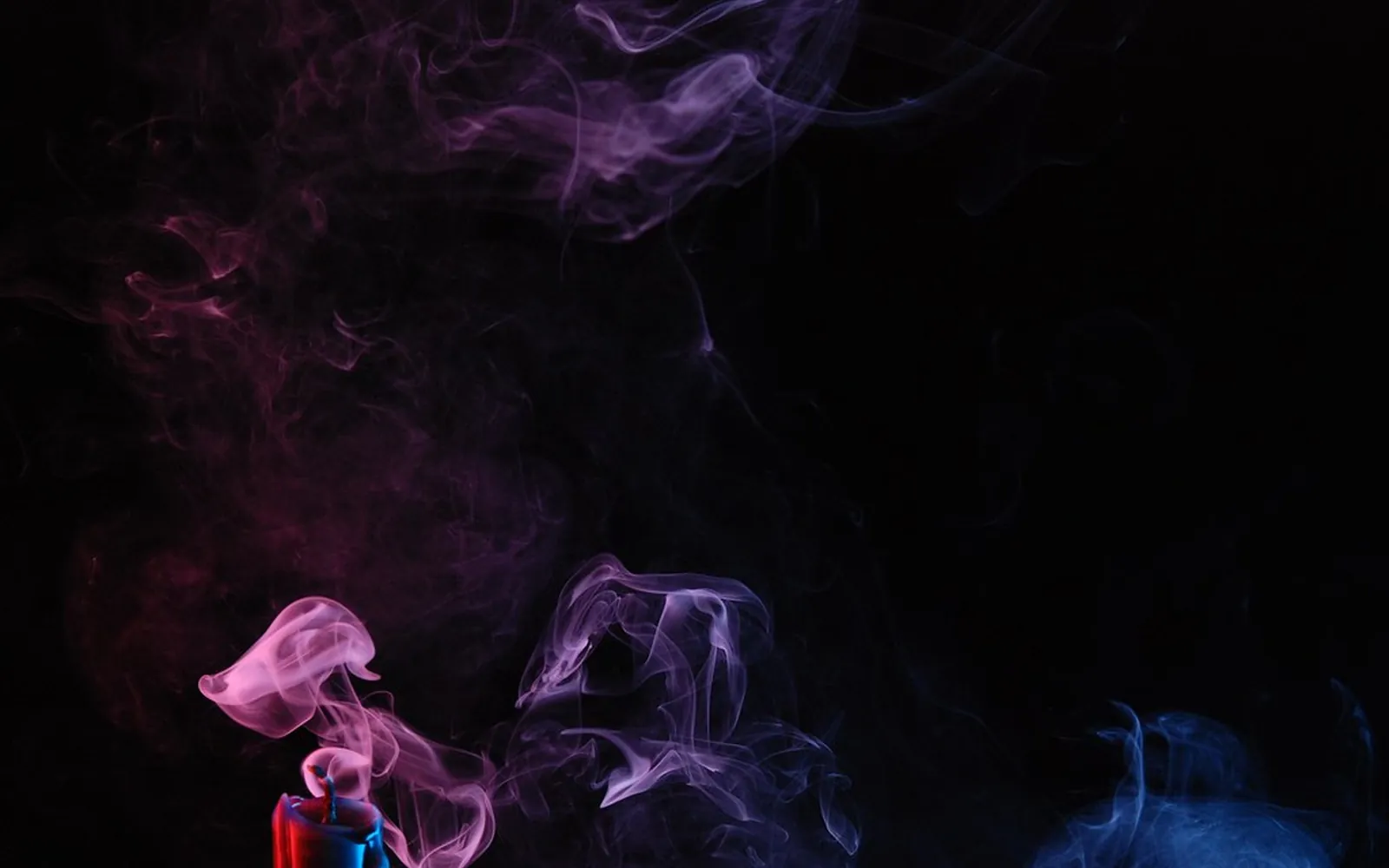
Wolfgang Paalen is the artist most closely linked with fumage, the technique of drawing with smoke. In 1936-37 he began passing a candle flame under freshly painted surfaces and letting the soot leave trails that he then turned into ghostly figures and landscapes. This page explains who Paalen was, how fumage works, what happened when he left Europe for Mexico, and how his idea connects to froissage and the other Surrealist chance techniques on this site.
A short biography
Wikipedia gives Paalen’s birth as 22 July 1905 in Vienna. In the early 1930s he belonged to the abstract artists’ association Abstraction-Création in Paris. In 1934 he married the poet and painter Alice Rahon. In 1935 he joined the Surrealist group around André Breton.
His Surrealist years were short but productive. Wikipedia singles out Pays interdit (1936-37) as his first major Surrealist painting. In May 1939, with war approaching, he travelled to New York and then to Mexico, where he arrived in September 1939 and stayed for the rest of his life. He died in Taxco in September 1959; sources disagree on whether it was the 24th or 25th.
What fumage is
Tate’s art-terms page defines fumage as a technique in which impressions are made by the smoke of a candle or kerosene lamp held close to a surface. The soot settles in trails and clouds that no brush could make. The artist then reads shapes into the marks and develops them, just as a froissage artist reads figures into the creases of a crumpled sheet.
Paalen typically worked on a wet ground, so the soot fixed into the paint. The resulting images are soft, smoky and full of fine branching lines. They suited the Surrealist interest in dreams and in images that seem to appear by themselves. Our practical guide to the fumage art technique explains how to try it safely today.
Fumage among the chance techniques
By the mid-1930s the Surrealists had several methods for provoking images:
- Frottage (Max Ernst, 1925): rubbing over textured surfaces.
- Grattage: scraping paint to reveal textures beneath.
- Decalcomania (popularised by Óscar Domínguez in 1936): pressing paint between two surfaces.
- Fumage (Paalen, 1936-37): smoke on a painted ground.
All four share a logic that froissage also follows: start with an accident, then look hard until an image emerges. Our overview of surrealist art techniques compares them side by side, and chance in art traces the wider history.
Mexico and DYN
In Mexico Paalen moved away from orthodox Surrealism. He founded the art and ideas journal DYN, whose first issue appeared in spring 1942; five issues were published up to 1944. The name comes from a Greek word meaning “that which is possible”. In its pages he argued for a new art informed by science, prehistoric and Indigenous American art, and he publicly distanced himself from Breton.
His later paintings moved further towards abstraction. DYN circulated in New York as well as Mexico, and Paalen is often discussed as one of the émigré artists who carried Surrealist ideas about automatism and chance towards the post-war American avant-garde. For a reader new to the period, the journal is a good example of how chance techniques travelled with artists who left Europe.
Fumage after Paalen
Other artists took up smoke. The Czech poet and artist Ladislav Novák, best known for his froissages, also made smoke drawings from the early 1970s (see Ladislav Novák and froissage). Today fumage is taught in art schools and workshops as a way to loosen up drawing, usually with strict fire precautions.
Fumage and froissage compared
Fumage and froissage look very different, but they work the same way in the studio. Both begin with a gesture whose result the artist cannot predict: passing a flame under a surface, or crumpling a sheet in the fist. Both then require a second, slower phase of looking, in which the artist turns the support, waits for a figure to appear and decides how much to add. The main differences are practical:
- Risk. Fumage involves an open flame and soot; froissage needs only paper and ink, which makes it far better for children and classrooms.
- Mark. Smoke leaves soft, cloudy, branching trails; creases leave sharp, angular lines.
- Permanence. Soot smudges easily and must be fixed; inked creases are stable once dry.
Many artists combine the two: a crumpled and inked sheet, then a light pass of smoke on a primed card glued beside it. If you try that, follow the safety steps below.
Seeing Paalen’s work
Paalen’s paintings are in museum collections in Europe and the Americas, and they are still in copyright in many countries, so we do not reproduce them here. Search the online catalogues of major modern art museums for “Paalen” to see fumage works. Exhibition catalogues and the Wikipedia article list major retrospectives.
Practical lessons from Paalen
If you want to borrow Paalen’s approach in a safe, simple form:
- Use a heat-resistant surface such as a ceramic tile or thick card primed with gesso, never thin paper alone.
- Work on a fireproof tray, away from fabrics, with water nearby and long hair tied back.
- Pass the card quickly above a tea light at a height where the flame just touches the smoke zone; move constantly.
- Let the soot settle, then spray with fixative outdoors or cover with a sheet of glassine.
- Look at the marks, turn the card around, and draw into them with ink or white paint.
For children, use a safer analogue: crumple and ink paper instead. The froissage for kids guide shows how to get similar dreamlike textures without a flame.
Flame-free chance techniques for groups
Fumage is spectacular, but an open flame is not always possible, especially with children or in a shared classroom. Several techniques give a similar feeling of images appearing by themselves without any fire risk:
- Blow painting. Runny ink blown through a straw breaks into fine, branching trails that recall the thin lines of soot. See blow painting with straws.
- String pulling. Paint dragged by a string between two folded sheets makes feathery, smoke-like plumes. See string pull painting.
- Salt in watercolour. Salt sprinkled into a damp wash leaves soft, cloudy speckles. See the watercolor salt technique.
None of these reproduces the exact look of fumage, and that is not the aim. What they share with Paalen’s method is the two-stage process: first a mark you only partly control, then a slow, patient look to find what it suggests. That second stage is where most of the artistic decisions are made, and it is the part worth practising.
Frequently asked questions
Did Wolfgang Paalen invent fumage?
He is the artist who made fumage known as a Surrealist technique, developing it in 1936-37. Wikipedia notes that smoke had been used decoratively before him, so 'developed' or 'introduced into Surrealism' is more accurate than 'invented'.
How did Paalen make fumage paintings?
He passed the flame of a candle or oil lamp beneath a freshly painted or prepared surface so that soot settled in unpredictable trails, then developed the marks with paint. Tate's art-terms page describes fumage in this way.
What was DYN?
An art journal Paalen founded in Mexico. Its first issue appeared in spring 1942 and five issues were published up to 1944. The title comes from a Greek word meaning 'that which is possible'.
When did Wolfgang Paalen die?
In September 1959 in Taxco, Mexico. Sources differ on the exact day (24 or 25 September).
Sources
Editorial team
The Froissage.com editorial team researches the history of froissage from museum, encyclopedia and publisher sources and writes practical guides to the technique.