Artists
Jean Dubuffet Texturologies: Paintings of Soil and Chance
Written by Froissage Editorial Team · Updated
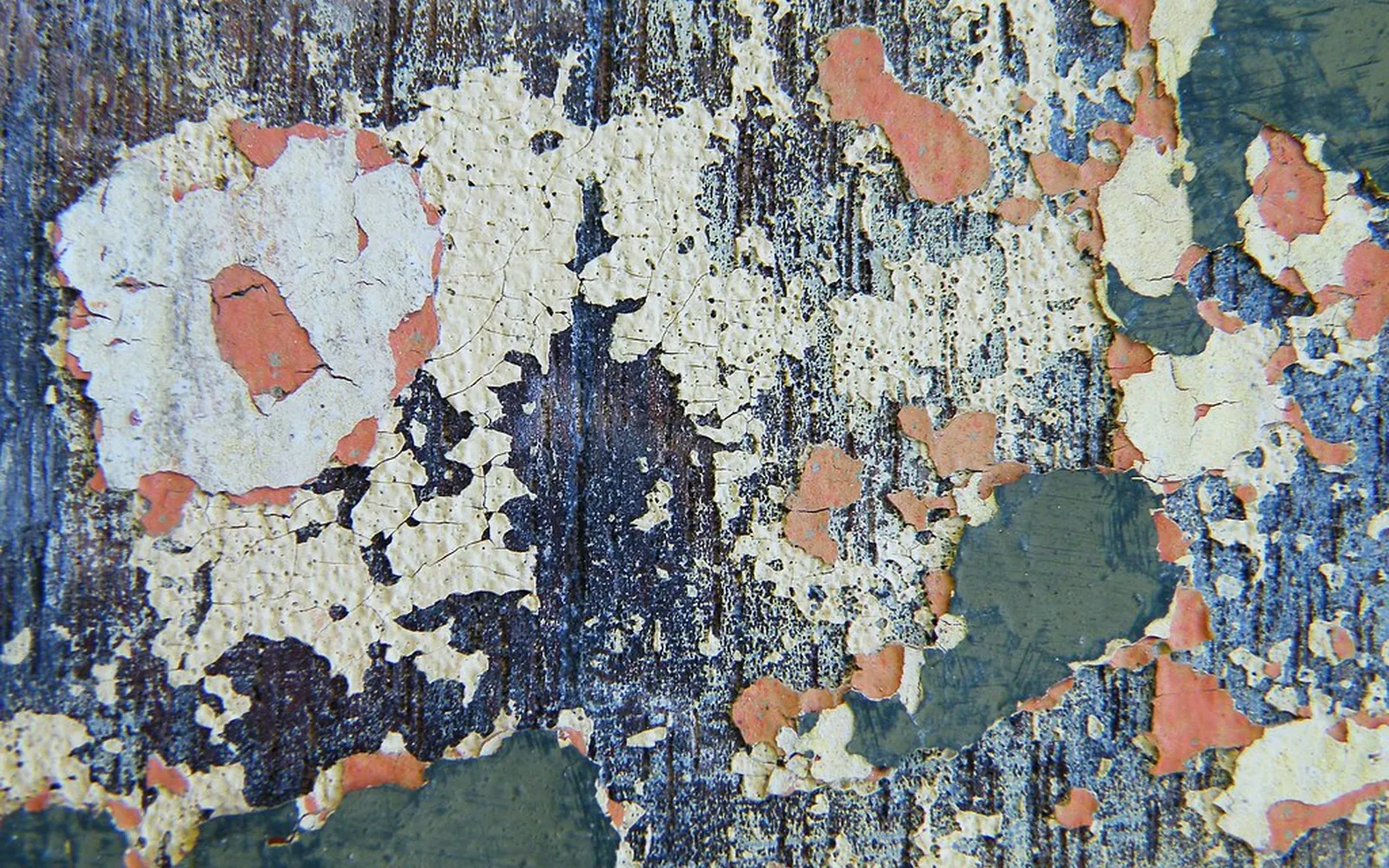
Jean Dubuffet’s Texturologies are paintings without a subject. Look at one from across a room and you see a fine, speckled field of browns, greys and earth colours, like a patch of soil or a stretch of old wall. Step closer and the field breaks into droplets, grains of sand, scratches and smears. There is no horizon, no figure and no central motif: the texture is the picture. Dubuffet (1901-1985) made the series in two concentrated periods, in Venice in September 1957 and in Paris in October 1958.
For anyone interested in froissage, the Texturologies are worth knowing. They come from the same conviction that runs through the art of chance: that a surface made by a process can hold as much meaning as a drawn image, and that the artist’s job is partly to set up the process and partly to look at what it produces.
Who was Jean Dubuffet?
Dubuffet was born in Le Havre in 1901 and died in Paris in 1985. He came from a family of wholesale wine merchants and ran a wine business for years before committing fully to painting in the 1940s. He is best known for coining the term art brut (“raw art”) for work made by people outside the art world and its conventions, such as self-taught artists and psychiatric patients. In 1948 he and others founded the Compagnie de l’Art Brut in Paris to find, document and exhibit such work; his collection is now in Lausanne, Switzerland.
His own painting was deliberately rough. He mixed sand, gravel, tar and other materials into thick pastes and scratched into them, and he was suspicious of polished technique. The Texturologies are one of the purest expressions of that attitude.
What the Texturologies look like
The Centre Pompidou describes the series as growing out of Dubuffet’s experiments with materials. He put aside portraits and landscapes and made what he called views pressed close to the ground, comparing the result to an uninterrupted, vibrating fabric. The museum’s own example, Sérénité profuse (October 1957, oil on canvas), shows how such a surface can suggest several things at once: scattered matter, a plant sample seen under magnification, or the night sky.
That ambiguity is deliberate. The paintings are all-over compositions: every part of the canvas has roughly the same importance, and you could crop or extend them without losing a focal point. A Phillips catalogue essay reports that Dubuffet made basic sections that could be rearranged in different combinations, so that the soil could be shown without a fixed composition.
How Dubuffet made them
No single document lists his recipe, but museum and auction descriptions agree on the main ingredients:
- Spattering. He laid the canvas on the floor and shook or flicked a loaded brush over it, building up layer upon layer of droplets. Commentators have compared the floor-based method to Jackson Pollock’s, though the results are very different (see our drip painting technique).
- Sand and paste. Sand, gravel or plaster was sometimes added to thicken the surface.
- Scratching. The Phillips essay mentions scratching the paint with the prongs of a fork, much like the grattage art technique of Max Ernst.
- A masons’ method. The same essay describes a plastering technique called “Tyrolean”, in which masons applied plaster to a wall and textured it with branches. Dubuffet adapted that idea to paint.
- Layering and transfers. He also layered paint and pressed sheets of paper onto the wet surface, a step close to crumpled paper printing.
The process mixes control and chance. Dubuffet chose the colours, the density and the moment to stop, but the exact position of each droplet and scratch was left to the action of the brush and the material.
Les Phénomènes: texture as printmaking
Alongside the paintings, Dubuffet started a huge cycle of lithographs called Les Phénomènes. The Guggenheim Museum Bilbao says he worked on the Phenomena prints intensively from 1958 through 1962, creating 362 individual lithographs. Rather than drawing on the printing surface with a brush, he took imprints on lithographic transfer paper of walls, stones, orange peel and a friend’s back, among other things. The Cleveland Museum of Art adds an old suitcase to that list and explains that the imagery had to be an indeterminate, all-over texture, so that plates could be combined.
This is the part of Dubuffet’s work closest in spirit to froissage and frottage. Max Ernst rubbed graphite over floorboards; the froissage artists crumpled paper and inked its creases; Dubuffet took imprints from the surfaces of the world and printed them. In each case the texture is found, not invented, and the artist’s title tells us what to see in it.
Dubuffet, chance and froissage compared
| Texturologies | Froissage | |
|---|---|---|
| Where the texture comes from | Spattered paint, sand, scratches, imprints | Creases of crumpled paper |
| Support | Canvas, laid flat | Paper, crumpled and flattened |
| Role of the artist | Chooses colours and density, stops the process | Chooses ink and crumpling, then reads and develops the image |
| Result | All-over field without a centre | Often an image developed from the creases |
The big difference is the second stage. Froissage artists such as Ladislav Novák often looked for figures in the creases and drew them out. Dubuffet mostly left the texture as it was and let the viewer do the seeing. Both rely on the same human habit described in pareidolia in art: we cannot look at a texture for long without finding something in it.
Try it: a Texturologie-style study
You do not need oil paint or a large canvas. A sheet of thick paper, two or three earth colours of acrylic or poster paint, an old toothbrush, a fork, a little sand and a crumpled sheet of newspaper are enough. The steps box on this page gives the sequence; here are some tips:
- Keep the colours close. Dubuffet’s soil fields work because the colours are related. Choose a dark, a middle and a light earth tone, plus perhaps one surprise colour in small amounts.
- Cover everything. Aim for an even density over the whole sheet. If one area becomes a focus, spatter over it.
- Use crumpled paper as a stamp. Press a crumpled sheet into the wet paint and lift it off. The creases leave a print that looks remarkably like cracked earth.
- Work in modules. Make several small squares and arrange them side by side, as Dubuffet did with his sections.
For a classroom, combine this with a texture hunt: students take rubbings or photos of walls, bark and pavements, as described in our guide to crumpled paper texture photography, and then try to imitate one of those surfaces with spatter and stamping.
Seeing the works
Texturologies and Phénomènes prints are held by several large museums, including the Centre Pompidou in Paris, the National Gallery of Art in Washington and the Cleveland Museum of Art, many of which show them in their online collections. Display changes often, so check the museum’s website before visiting. Dubuffet’s works are still in copyright, so this page links to museum records rather than reproducing them.
Related guides
Dubuffet’s texture paintings fit into the wider story told in chance in art and surrealist art techniques. For artists who worked with folded and crumpled supports in the same decades, see Simon Hantaï’s pliage and the Supports/Surfaces movement.
Frequently asked questions
What are Dubuffet's Texturologies?
A series of paintings by Jean Dubuffet from 1957 and 1958 that cover the whole canvas with fine, speckled texture. They have no central subject; they evoke the ground, rubble, walls or a night sky, and their titles often suggest such readings.
How did Dubuffet make the Texturologies?
Auction and museum descriptions mention spattering paint by shaking a loaded brush over a canvas laid on the floor, scattering sand, scratching the paint with the prongs of a fork, and a plasterers' method in which wet plaster is textured with branches. He also built up thick paste and worked into it with his fingers and tools.
What is the difference between the Texturologies and Les Phénomènes?
The Texturologies are paintings. Les Phénomènes is a large cycle of lithographs Dubuffet made between 1958 and 1962, for which he took imprints of real textures on transfer paper. Some plates in the prints are also titled Texturologie.
Is Dubuffet connected to froissage?
Not directly. He belongs to the same broad family of artists who let materials and chance produce the image, which also includes the froissage artists. The comparison is useful for teaching, because both approaches start from texture rather than from a drawn subject.
Where can I see Dubuffet's Texturologies?
Examples are held by major museums, including the Centre Pompidou in Paris, whose Sérénité profuse is dated October 1957. Check the online collection of a museum before visiting, because works are not always on display.
Sources
Editorial team
The Froissage.com editorial team researches the history of froissage from museum, encyclopedia and publisher sources and writes practical guides to the technique.