Artists
André-Pierre Arnal: Froissage, Pliage and Supports/Surfaces
Written by Froissage Editorial Team · Updated
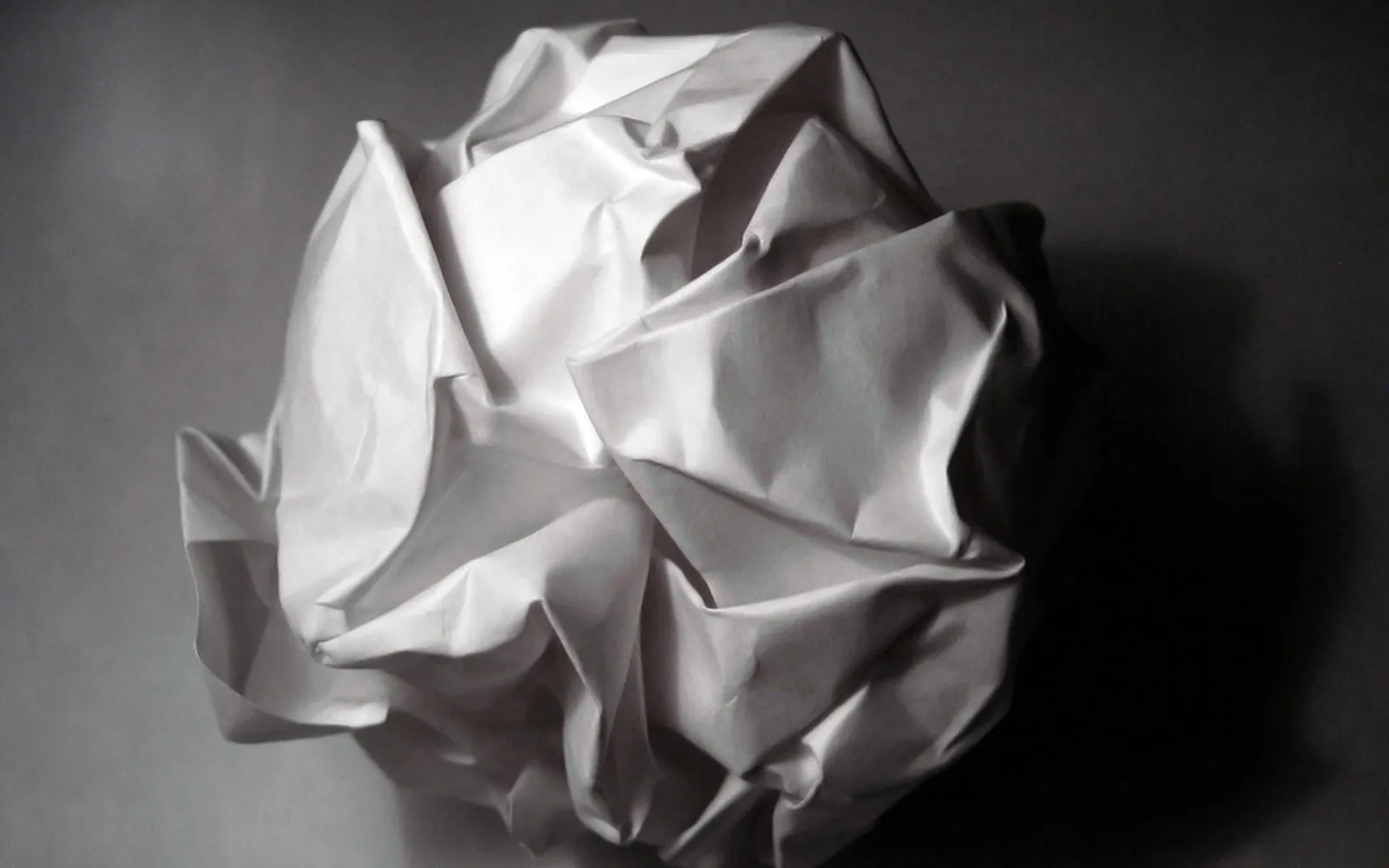
André-Pierre Arnal made froissage on a scale few people imagine when they think of crumpled paper. In 1968 he crumpled a canvas more than three metres tall and sprayed it with paint, so that the creases themselves became the picture. This page looks at André-Pierre Arnal’s froissage and pliage works, his place in the French group Supports/Surfaces, and what artists and teachers can learn from his approach. As with other artists on this site whose work is still in copyright, we describe and link to his works rather than reproduce them.
A short biography
French Wikipedia gives his birth as 16 December 1939 in Nîmes and his death as 7 July 2024 in Montpellier; The Art Newspaper’s French edition reported his death in Montpellier that July. He studied literature and art history at the University of Montpellier and held his first solo exhibition there in 1962. He is described as attached to the Supports/Surfaces movement, which he joined in the late 1960s, during the period 1968-1971.
Beyond painting, he illustrated poetry books for the publisher Fata Morgana, including texts by Pierre Torreilles and André Pieyre de Mandiargues. Public collections that hold his work include the Musée national d’art moderne (Centre Pompidou), the Musée Fabre in Montpellier and Les Abattoirs in Toulouse.
Supports/Surfaces in a nutshell
Supports/Surfaces was a loose group of mostly southern French artists active around 1969-1972. They took painting apart into its physical components: the stretcher, the canvas, the paint, the act of applying it. Canvases were often taken off the stretcher, then folded, knotted, cut, sewn, dyed or crumpled. The Fondation Gandur pour l’Art sums up the group as questioning the materiality of painting and deconstructing traditional painting.
Crumpling and folding were obvious tools for this project. They show the canvas as cloth, a thing with weight and memory, rather than as a window onto a scene.
The 1968 Froissage
The Fondation Gandur pour l’Art in Geneva owns a work by Arnal simply titled Froissage, dated 1968, in spray paint on unstretched canvas, about 350 by 239 cm. According to the foundation, Arnal crumpled the canvas and covered it in paint, letting random forms appear. Paint sprayed onto a crumpled surface lands on the ridges and misses the hollows; when the canvas is opened, it shows a network of coloured and blank zones that maps the crumpling.
The foundation also points to the obvious ancestor: Simon Hantaï, whose crumpling and folding method strongly influenced Arnal and the Supports/Surfaces artists. Hantaï used crumpling as early as 1962 in his Manteau de la Vierge works. Our page on Simon Hantaï’s pliage explains that method in detail.
The Pliages of the 1970s
From around 1970 Arnal turned to folding. Accounts of his practice date the Pliages to roughly 1970-1981, after his monotypes and froissages. The process was physical and repetitive: a square of canvas lay on the floor, and the artist folded it and sprayed paint, folded again and sprayed again. Each fold typically halved the visible surface, so the pattern that appears when the canvas is opened is regular and geometric, unlike the irregular web of a froissage.
The Centre Pompidou holds Pliage (Grand triangle bleu et rouge) from 1971. Its online record is the best place to see an image legally and to check the dimensions.
Froissage versus pliage
The two methods form a useful pair:
| Froissage (crumpling) | Pliage (folding) | |
|---|---|---|
| Control | Low: creases fall where they fall | High: folds follow a plan |
| Pattern | Irregular web, like a map or a cracked surface | Repeating grid or triangles |
| Feeling | Organic, lyrical | Systematic, geometric |
One critic quoted in the literature on Arnal described the folds as producing modular, more or less geometric repetitions, and the froissages as more lyrical and vitalist. Both start from a deliberate gesture and end with an image the artist could not fully predict, which is why they belong in any discussion of chance in art.
How Arnal differs from paper froissage
On paper, froissage usually serves the imagination. Ladislav Novák, the Czech poet-artist, crumpled sheets, inked them and then drew figures he found in the creases (see Ladislav Novák). Arnal did the opposite: he left the creases abstract. There is nothing to “find” in his canvases; the subject is the crumpling itself and the way paint records it. If you want to compare the two traditions, read what is froissage and the overview of froissage artists.
Try an Arnal-inspired exercise
You do not need a three-metre canvas to understand the idea.
- Take a sheet of thin cotton fabric or a large sheet of brown paper.
- Crumple it, then open it only partly so it still has deep folds.
- Lay it outdoors or in a ventilated space and spray or flick diluted paint from one side only.
- Let it dry before opening it fully.
- For the pliage version, fold a square sheet in half, then in half again, spraying lightly after each fold.
Compare the two results. The crumpled sheet will show soft, unpredictable zones; the folded sheet a clear grid. For paper-based versions with children, see crumpled paper art ideas.
Where to learn more
Museum catalogues remain the most reliable source for dates and dimensions. The Centre Pompidou and Fondation Gandur pour l’Art pages listed below show images and technical details. Gallery websites and exhibition catalogues add more, but dates sometimes differ between sources, so check against a museum record when precision matters.
Arnal’s companions in Supports/Surfaces
Arnal’s crumpled and folded canvases make most sense beside the work of the other members of the group. Claude Viallat stamped a single simple shape again and again on unstretched tarpaulins and fabrics. Daniel Dezeuze showed stretchers without canvas. Patrick Saytour revisited the folding technique, and Bernard Pagès and Toni Grand worked with wood and cord. Each artist isolated one material part of painting and made it the subject.
Seen in that company, Arnal’s Froissage of 1968 is less an isolated experiment than one answer to a shared question: what is left of a painting when you remove the picture? His answer was the crease. Our overview of the Supports/Surfaces movement explains the group’s exhibitions, its 1972 split, and how it relates to Simon Hantaï. For a very different use of chance in the post-war decades, compare Ellsworth Kelly’s chance collages, made in Paris in the early 1950s.
Frequently asked questions
Who was André-Pierre Arnal?
A French painter, born in Nîmes on 16 December 1939 and died in Montpellier in July 2024, associated with the Supports/Surfaces group around 1968-1971 and known for crumpled and folded canvases.
What is Arnal's Froissage?
A 1968 work in spray paint on unstretched canvas, about 350 by 239 cm, described by the Fondation Gandur pour l'Art. Arnal crumpled the canvas and covered it in paint, allowing random forms to emerge from the creases.
How is Arnal's froissage different from froissage on paper?
In paper froissage the creases usually become the starting point for a drawing. Arnal kept the result abstract: the creases and the paint they caught are the whole subject, with no figures drawn in.
Where can I see works by André-Pierre Arnal?
French Wikipedia lists the Centre Pompidou, the Musée d'art moderne de Paris, the Musée Fabre in Montpellier, Les Abattoirs in Toulouse and the Albright-Knox in Buffalo among public collections. Check each museum's online catalogue for what is on display.
Sources
Editorial team
The Froissage.com editorial team researches the history of froissage from museum, encyclopedia and publisher sources and writes practical guides to the technique.