Technique
Paper Marbling Technique: Suminagashi, Ebru and Easy Ways
Written by Froissage Editorial Team · Updated
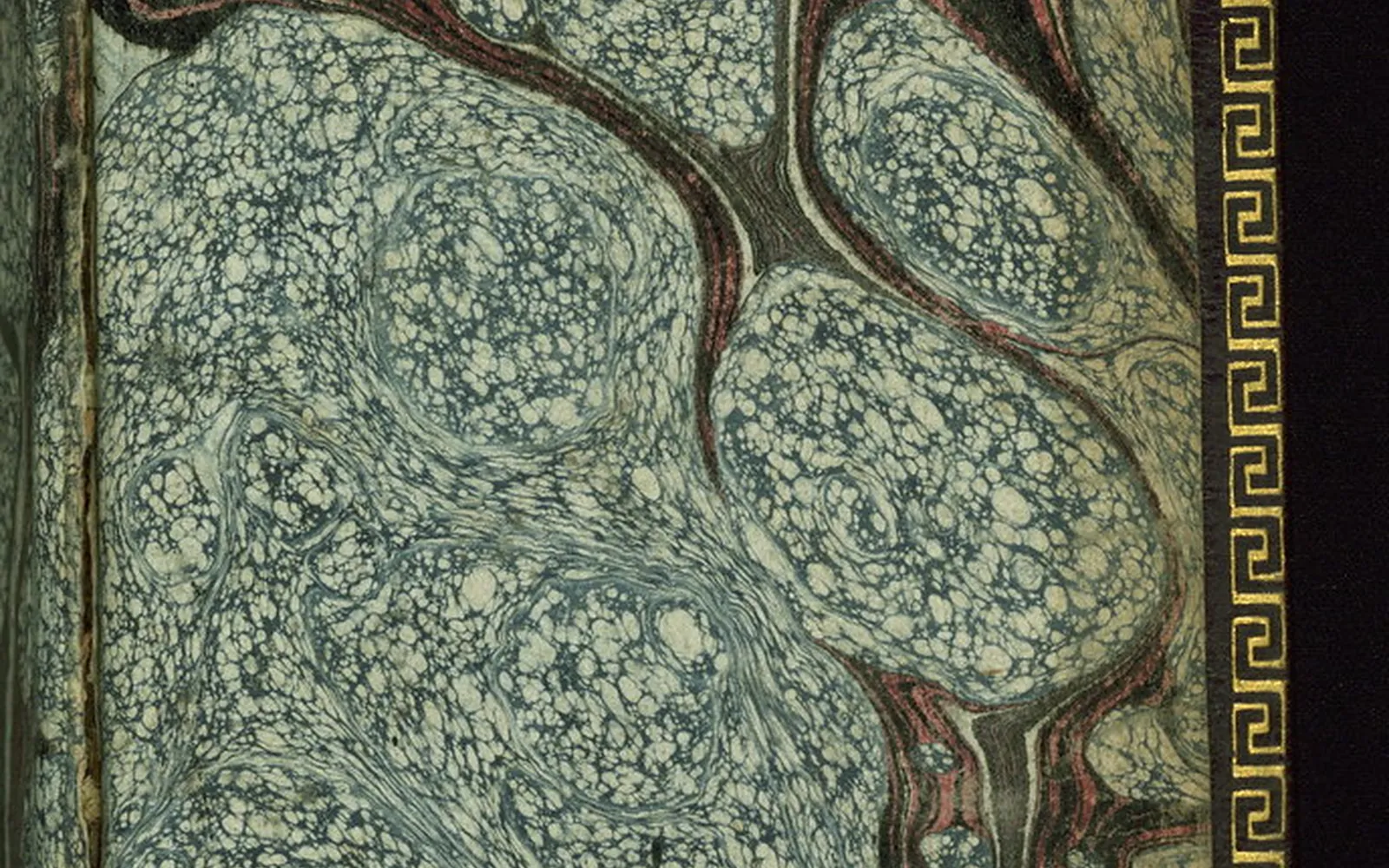
The paper marbling technique creates patterns by floating colour on liquid and printing it onto paper. Ink or paint spreads in rings, is gently moved with a breath, a stick or a comb, and is lifted off with a sheet laid on top. No two sheets are ever the same. For anyone who loves froissage, marbling is a close relative: both are ways of letting a material make most of the marks while you steer.
How marbling works
Colour dropped onto water normally sinks or spreads out of control. Marblers solve this in two ways. In the Japanese method, suminagashi, ink is floated on plain water with the help of a surfactant that makes it spread in thin films. In the Turkish and European methods, the water is thickened into a size, so heavier paints float and stay where they are placed.
Wikipedia’s article on paper marbling notes that traditional sizes included gum tragacanth and linseed, and that boiled Irish moss, rich in carrageenan, has been used since the late nineteenth century. Many marblers today use powdered carrageenan or a synthetic cellulose size. A surfactant such as ox gall is mixed into the colours to help them spread.
When the pattern is ready, the marbler lays paper on the surface. The colour transfers at once, and the paper is lifted, rinsed if needed and dried. Wikipedia describes each print as a unique monotype, the same idea we met in crumpled paper printing.
A short history
Suminagashi, literally “floating ink”, appears to be the earliest form. Wikipedia points to a 12th-century Japanese source and notes that the Hiroba family claims to have practised it since 1151.
Ebru, the Turkish tradition, uses a thickened bath and combs or styluses. Floating colour on size developed in Persia, Central Asia and the Ottoman world from roughly the fifteenth and sixteenth centuries, and the modern Turkish school is linked to nineteenth-century masters in Istanbul.
European marbling spread in the seventeenth century. Wikipedia cites a 1616 account by Gerhard ter Brugghen and a widely read Latin description by Athanasius Kircher in 1646. Marbled papers became standard for book endpapers and covers; the image at the top of this page is a marbled paper inside a historic book binding at the Walters Art Museum. They were even used on security documents because a marbled pattern is so hard to copy exactly.
Easy suminagashi at home
Suminagashi is the best starting point because it needs no size and no alum.
You need: a shallow tray, water, black or coloured ink (or watercolour diluted to ink consistency), two soft brushes, a surfactant (ox gall from an art shop, or a very small amount of washing-up liquid in water), absorbent paper, and newspaper.
Skim the water with a strip of newspaper to remove dust. Touch the ink brush lightly to the surface; a disc of ink spreads. Touch the surfactant brush to the centre; it pushes the ink into a ring. Alternate ink and surfactant to build up rings like a tree trunk. Blow gently across the tray, then lay the paper on top from one edge to the other and lift it. Dry it flat.
The step-by-step instructions above sum up the process. Expect your first few sheets to be pale or patchy: the balance between ink and surfactant takes practice.
Marbling with paint on a size
For stronger colours and combed patterns, marblers use acrylic or gouache on a carrageenan or cellulose size, and pre-treat paper with alum. This takes more preparation: the size usually rests for some hours, and alum must be handled with gloves. Follow the instructions supplied with a marbling kit, and keep the alum and size away from food and small children.
Troubleshooting
- Colours sink: the ink is too heavy or needs more surfactant; on a size, the paint is too thick.
- Colours spread and vanish: too much surfactant. Use a cleaner brush and a weaker mix.
- Air bubbles leave white spots: lower the paper in a smooth rolling motion instead of dropping it flat.
- Muddy sheets: too many colours. Start with one or two.
Marbling and froissage together
Marbled sheets make striking grounds for froissage-style drawing. Crumple a dry marbled sheet gently, open it, and draw along the creases and rings with a fine pen to bring out figures or landscapes. You can also cut marbled and crumpled papers into shapes for froissage collage.
The deeper link is the role of chance. Like decalcomania and froissage itself, marbling lets the material propose and the artist choose. Our page on chance in art explores that idea, and crumpled paper art ideas offers more projects that combine textures.
Patterns to try
Once you can float stable rings, experiment with movement:
- Breath patterns. Blow gently from one side through a straw held above the surface. The rings stretch into waves and wood-grain shapes.
- Single-line drag. Draw one hair, a toothpick or a thin stick slowly through the centre of the rings. The pattern bends into a heart or chevron.
- Double drag. Drag across in one direction, then at right angles. The result looks like feathers or watered silk.
- Two colours. Alternate black and blue ink, or indigo and rust, for a calm, traditional look.
Keep a notebook of what you did for each sheet. Marbling is partly chance, but repeating a movement gives a recognisable family of patterns.
Classroom notes
Suminagashi works well with children from about seven with adult help: it is quiet, slow and fascinating to watch. Use washable ink, cover tables, and give each child a few sheets so they can improve. For younger children, shaving-cream marbling gives a similar look with less precision; just be clear that it is a shortcut, not traditional marbling.
Frequently asked questions
What is the paper marbling technique?
It is a way of decorating paper by floating colours on the surface of water or a thickened liquid, moving them into patterns, and laying a sheet of paper on top to pick up the design. Wikipedia describes each result as a unique monotype.
What is the difference between suminagashi and ebru?
Suminagashi is the Japanese method of floating ink on plain water, giving soft concentric rings. Ebru is the Turkish method using a thickened bath, which lets the marbler comb colours into sharper patterns and motifs.
What do I need to start marbling at home?
For suminagashi: a shallow tray of water, two brushes, ink or diluted watercolour, a drop of surfactant such as ox gall or a tiny amount of washing-up liquid, and absorbent paper such as printer paper or thin Japanese paper.
Do I need alum to marble paper?
For marbling on a thickened size with paints, paper is often pre-treated with alum (aluminium sulphate) so the colours bond. Wikipedia notes that suminagashi and ebru usually do not need this step.
Is shaving cream marbling real marbling?
It is a popular classroom shortcut that gives a marbled look, not traditional marbling. It is fine for young children, but the colours sit on a foam instead of floating on a bath.
Sources
Editorial team
The Froissage.com editorial team researches the history of froissage from museum, encyclopedia and publisher sources and writes practical guides to the technique.