Artists
Frank Gehry and Crumpled Paper: The Myth and the Method
Written by Froissage Editorial Team · Updated
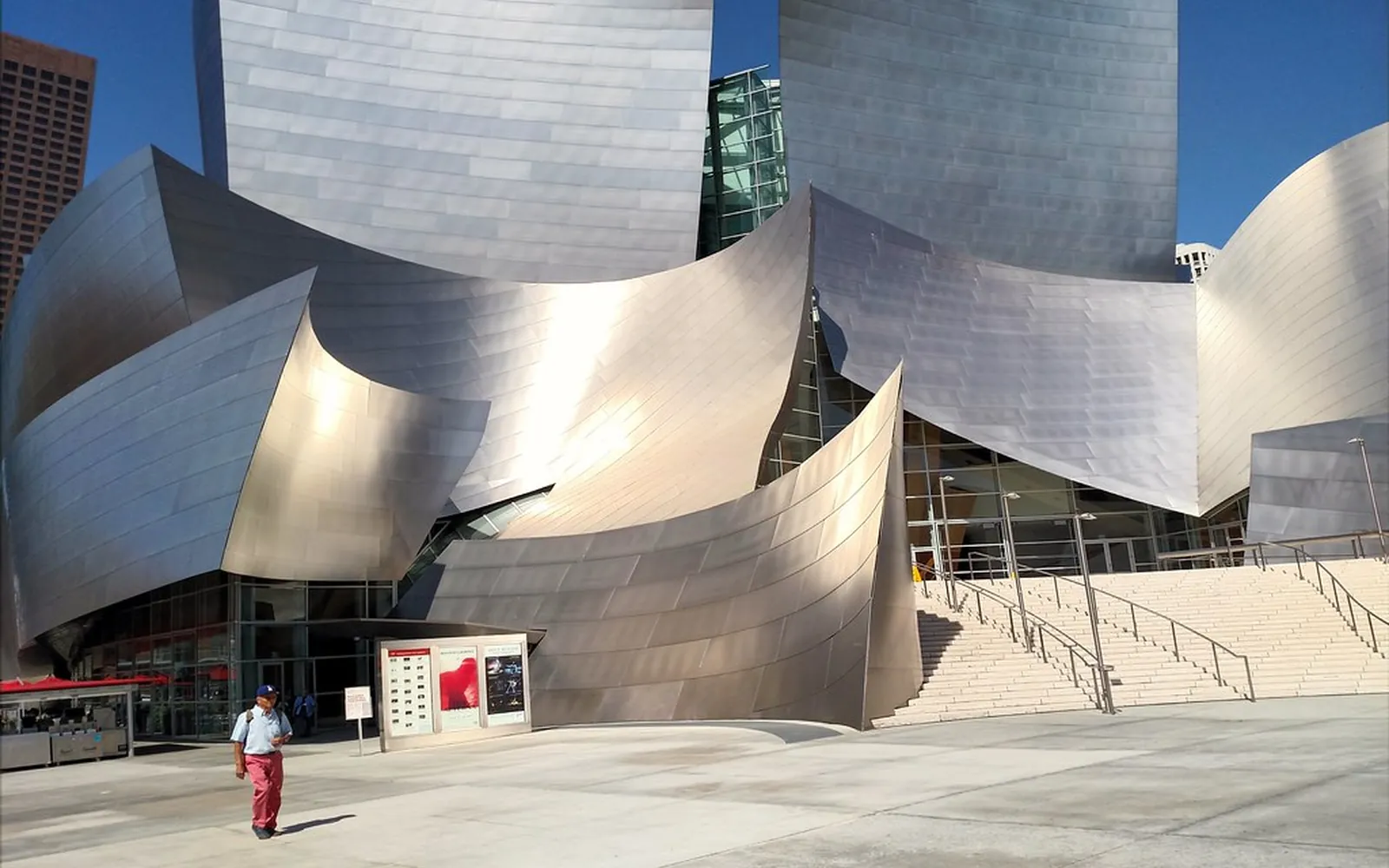
Frank Gehry and crumpled paper have been linked in the public imagination for two decades. Look at the curling steel of the Walt Disney Concert Hall in Los Angeles or the titanium waves of the Guggenheim Museum Bilbao and it is easy to believe that the architect simply crumpled a sheet, opened it and handed it to the builders. It is a good story. It is also, by Gehry’s own account, not how he worked, and he spent years trying to shake it off.
On a site about froissage, the art of crumpled paper, the legend deserves a closer look. Where did it come from, what did Gehry really do, and is there anything true in it?
Who was Frank Gehry?
Frank Gehry was born Ephraim Owen Goldberg in Toronto on 28 February 1929 and died at his home in Santa Monica, California, on 5 December 2025, aged 96. He received the Pritzker Architecture Prize in 1989. His best-known buildings include his own remodelled house in Santa Monica, wrapped in metal and chain-link after he bought it in 1977; the Dancing House in Prague (1996); the Guggenheim Museum Bilbao (1997); and the Walt Disney Concert Hall (2003). He described architecture as sculpture: a three-dimensional object by definition.
The Simpsons and the crumpled letter
The crumpled-paper story owes most of its fame to television. In The Seven-Beer Snitch, an episode of The Simpsons first broadcast on 3 April 2005, Marge persuades Springfield to commission a concert hall and writes to Gehry. In a quick gag, Gehry, voicing himself, reads her letter, crumples it and throws it down, then looks at the crumpled ball and has his idea. The concert hall that follows copies the shape of the letter.
Wikipedia’s article on the episode notes that many people came to believe this was how Gehry found the inspiration for real buildings such as the Walt Disney Concert Hall, and that this is not the case. In a 2011 CNN interview Gehry described the joke as fun, but said “it has haunted me”, and complained that clients would offer him money to crumple a piece of paper so they could build it. Press reports at the time said he regretted the appearance because it made people misunderstand his process.
How Gehry actually designed
Gehry’s real method was slower and more laborious than any single gesture. Accounts of his office describe a sequence like this:
- Freehand sketches. Gehry drew fast, looping sketches that captured a feeling or a movement rather than a plan.
- Rough physical models. His team built model after model from paper, card and found materials, cutting, bending and taping shapes and changing them repeatedly. An ACSA conference paper on the Walt Disney Concert Hall describes how hand-made models stayed central through schematic design and design development.
- Digitising. From the early 1990s the office used CATIA, a 3D program developed for the aerospace industry. The same paper explains that CATIA was introduced midway through the design process to translate the physical models into precise geometry, which could then be passed to engineers, contractors and fabricators.
- Building. Only with that precise data could the curved steel and titanium panels be manufactured and fitted. The firm later spun off Gehry Technologies (2002), which worked with Dassault Systèmes on the software Digital Project.
So paper was everywhere in Gehry’s studio, but as a modelling material shaped with care, not as a crumpled ball whose accidental form was copied. Hundreds of models might lie behind one building.
The building that really is called a paper bag
Ironically, one late Gehry building did end up with a crumpled-paper nickname. The Dr Chau Chak Wing Building at the University of Technology Sydney opened on 2 February 2015. Its facade of 320,000 custom-designed bricks, laid by hand, bulges and folds in soft waves, and it was quickly nicknamed the “squashed brown paper bag”. Gehry took the comparison in good humour: Wikipedia quotes him saying that maybe it is a brown paper bag, but it is flexible on the inside, with room for changes.
Dezeen reported that Gehry wanted a primitive, hand-laid material that could follow folded forms, and chose brick to match the neighbourhood. The design itself is described as based on a tree-house concept. The paper bag, in other words, was a comparison made by others after the fact, not the starting point.
Is there anything true in the legend?
The joke works because it touches something real. Crumpled paper produces forms that are hard to invent: sharp ridges next to soft curves, planes that twist and fold into each other. The science of crumpled paper shows how a crumpled sheet organises itself into facets and ridges, and many architecture and design students use paper as a quick way to explore form, just as Gehry’s team did with more care.
Artists have treated crumpled paper as raw material for a long time. The photographer Brassaï photographed rolled and crumpled scraps as involuntary sculptures in the 1930s; the froissage artists of Czechoslovakia and France inked the creases of crumpled sheets and looked for images in them (see the history of froissage). The difference is what happens next. In froissage, the accident is part of the finished work. In architecture, an accidental form is only a starting point; turning it into a safe, watertight building takes years of design and engineering.
Try it: from crumpled paper to model
This exercise, summarised in the steps box on this page, works well with older students and makes the gap between legend and practice visible:
- Crumple and stand. Crumple a sheet loosely and open it partly so it stands up. Turn it until it suggests a building.
- Sketch. Draw the form quickly from three sides, the way Gehry worked first in sketches.
- Rebuild in card. Try to make the same form from flat pieces of card. You will discover that many crumpled shapes cannot be made from flat panels without cutting, bending or simplifying, which is exactly the problem CATIA helped Gehry’s office solve.
- Discuss. What did the crumpled sheet give you that you would not have thought of? What did you have to change to make it buildable?
For more ways to work in three dimensions with paper, see crumpled paper sculpture and the folding methods of Simon Hantaï. If you want to photograph your models dramatically, the lighting tips in crumpled paper texture photography apply to architecture models as well.
The short answer
Frank Gehry did not design his buildings by crumpling paper. The idea comes from a 2005 Simpsons joke he later said haunted him. His forms came from sketches, many careful physical models and advanced software. But the legend lasts because crumpled paper really is a rich source of form, which is the same insight that drives froissage and the wider tradition of chance in art.
Frequently asked questions
Did Frank Gehry really design buildings by crumpling paper?
No. The story comes mainly from a 2005 Simpsons episode in which Gehry, playing himself, crumples a letter and turns it into a concert hall. His real process used sketches, many physical models in paper, card and other materials, and computer modelling to make the forms buildable.
Which Simpsons episode features Frank Gehry?
The Seven-Beer Snitch, first broadcast on 3 April 2005. Gehry voiced himself; he was the first architect to appear on the show.
What did Gehry say about the Simpsons joke?
In a 2011 CNN interview he called it a fun thing but said it had haunted him, adding that clients came to him asking him to crumple a piece of paper so they could build it.
Which Gehry building is called the paper bag?
The Dr Chau Chak Wing Building at the University of Technology Sydney, opened on 2 February 2015. Its wavy facade of 320,000 custom bricks has been widely likened to a squashed brown paper bag.
What software did Gehry use?
His office adopted CATIA, a 3D design program originally developed for the aerospace industry, to digitise physical models and pass precise geometry to engineers and fabricators. The firm later founded Gehry Technologies, which worked with Dassault Systèmes on a program called Digital Project.
Sources
Editorial team
The Froissage.com editorial team researches the history of froissage from museum, encyclopedia and publisher sources and writes practical guides to the technique.